


23 Jul Why Trauma Survivors Are Vulnerable to Dual Addictions

If trauma and dual addiction seem connected in your own life, or in someone you love, that connection is not a sign of weakness, a broken character or a life sentence. It is a pattern that makes sense once you understand what unresolved trauma does to the brain and body. Trauma is one of the strongest documented risk factors for developing a substance use disorder, and when the pain underneath goes untreated, more than one substance or behaviour can start to feel like a survival tool rather than a choice.
This article explains the main trauma-driven mechanisms behind dual addiction: why quick relief can feel urgent, why one addiction can hand over to another, and why relationships and shame matter so much. It then translates all of that into what recovery actually needs, which is rarely willpower on its own.
What Trauma and Dual Addiction Means: More Than One Coping Pattern, Not a Moral Failure
Dual addiction simply means more than one addictive pattern is present at the same time. That might be alcohol alongside another drug, or a substance addiction sitting next to a compulsive behaviour such as gambling, overeating or compulsive shopping. Substance and behavioural addictions both act on the brain’s reward system, which is why they can co-exist and reinforce each other.
It helps to separate this from dual diagnosis, a term you will see often. Dual diagnosis usually describes addiction plus a mental health condition, such as PTSD, anxiety or depression, whereas dual addiction focuses on the multiple addictive patterns themselves. In real life the two overlap constantly, because trauma-related symptoms like anxiety, low mood, shame, flashbacks or insomnia often sit alongside both the addictions and each other, highlighting the link between mental health and substance abuse.
One thing is worth saying plainly: trauma raises the risk of addiction, but it does not guarantee it. Many trauma survivors never develop substance problems at all. The point here is to explain vulnerability and what recovery needs, not to blame the survivor for how they learned to cope.
Self-Medication Can Make Quick Relief Feel Necessary
The clearest starting point is self-medication, the attempt to manage unbearable feelings without addressing what is causing them. A substance or behaviour can briefly numb a flashback, quiet anxiety, dull shame, ease the sense of being unsafe, or finally allow sleep. In the short term it works, which is exactly the problem.
That brief relief teaches the brain a lesson it does not forget. Drinking, using, gambling or overeating brought fast comfort once, so the brain files it away as something that reliably helps when distress spikes. Each repetition strengthens the link, even though the relief is short and the after-effects only deepen the pain. This is how self-medication and addictive behaviours become tightly bound together over time.
This is also where dual addiction takes root, because different trauma symptoms call for different kinds of escape. One substance might numb emotional pain, another might help someone sleep or feel in control, and a behaviour might fill the emptiness of numbness with a jolt of stimulation. A person can end up relying on more than one route to cope, since each one manages a different part of the distress. What looks from the outside like self-sabotage very often began as a genuine attempt to survive feelings that felt impossible to sit with.
Trauma Changes the Brain and Body Systems That Support Choice and Control
Understanding why willpower alone tends to fail means looking at what trauma does to the nervous system. After a traumatic experience, the body releases stress hormones like cortisol and adrenaline to prepare for danger, which is useful in a genuine crisis. When trauma goes unresolved, though, this stress system can stay switched on, leaving a person chronically hyperaroused or shut down, scanning for threat, and finding that ordinary stress feels urgent or overwhelming.
These shifts land on the exact brain regions that govern emotion and choice. The amygdala, which drives fear responses, becomes more reactive, while the prefrontal cortex, the part responsible for calm, rational planning, works less effectively. So during a trigger, fear-driven urges get louder at the same moment the brain’s brakes get weaker. On top of that, trauma can blunt or hijack the reward system, which makes anything that restores a quick hit of relief or pleasure especially compelling.
Put those together and a craving is not evidence of poor motivation. It is a sensitised survival system demanding relief right now. That is precisely why recovery built on willpower alone so often collapses: it asks the thinking brain to overrule a threat response that is running the show.
Why Addictions Can Stack Up or Substitute for Each Other
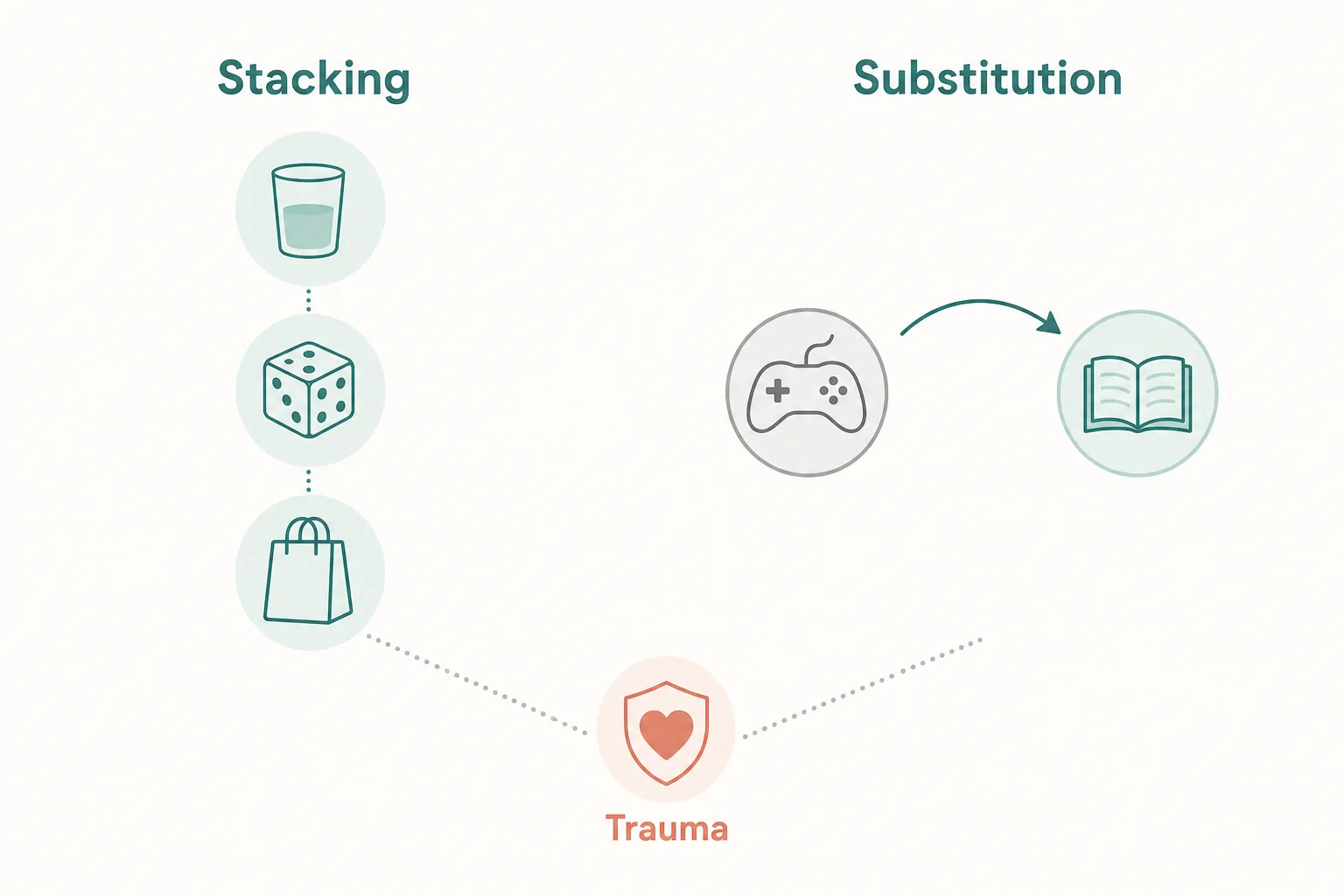
Two patterns explain how dual addiction develops and persists. The first is stacking, where more than one addiction builds at the same time because each delivers something different: one numbs, another stimulates, another provides a sense of control or distraction. The second is substitution, which is what happens when one addiction replaces another after cutting out the first, because the trauma triggers underneath were never treated and the distress simply finds a new outlet.
This creates a real trap in recovery. Focusing on a single substance or behaviour, without addressing the trauma driving it, can leave a person with no safer way to handle the flashbacks, shame, loneliness, anger, sleeplessness or body-level fear that the addiction was managing. Remove the main coping mechanism and the underlying pain does not disappear; it just looks for another door.
It also reframes relapse. Untreated trauma is one of the most documented reasons people return to use, so relapse risk is not only about whether substances are within reach. It rises sharply when trauma symptoms stay high and someone loses their main way of coping without anything to put in its place.
Trauma Can Weaken the Relationships and Support That Protect Recovery
Trauma does not only change the brain; it frays the relationships that would otherwise help someone stay grounded. It can lead to isolation, mistrust, secrecy and withdrawal, which strips away the safe connection people lean on during cravings and triggers. When someone faces distress alone, the pull back toward a familiar escape is stronger.
The surrounding environment matters too. If a person remains around conflict, coercion, violence, active substance use or constant emotional invalidation, the nervous system stays locked in survival mode, and recovery has little room to take hold. Stigma compounds this, because the fear of being judged for trauma, mental health symptoms or addiction delays help-seeking and makes dual addictions easier to hide, which lets them grow in the dark.
Low self-worth is its own relapse risk. If trauma has taught someone they are undeserving of care, they may struggle to ask for help, set boundaries or even believe recovery is possible. For loved ones, the most useful support is calm, boundaried and non-shaming, focused on safety and connection rather than interrogation or blame. Practical help, honest listening and encouragement to seek professional care do far more than pressure or judgment.
What Recovery Needs When Trauma and Multiple Addictions Are Linked
The core takeaway is straightforward: recovery works best when trauma, mental health symptoms and addictive behaviours are treated together, not as separate problems handled one at a time. Integrated treatment of trauma and substance use consistently produces better outcomes, and better retention, than treating either alone, because it targets the root rather than chasing each addiction in turn.
In practice, trauma-informed addiction treatment should start with a full assessment for multiple addictions and any co-occurring symptoms such as depression, anxiety or PTSD. From there it builds safety and stabilisation, relapse prevention, and concrete coping skills for emotional regulation, alongside healthier sources of connection and reward like sleep, movement and meaningful activity. Medical or psychiatric support, including medication where it is indicated, has its place too. Crucially, good trauma-informed care does not force premature disclosure, because people usually need grounding, trust and practical stability before processing traumatic memories in detail; trauma work like EMDR or trauma-focused therapy is paced to begin only when someone feels stable enough.
That leaves you with a concrete next step. If recovery keeps shifting from one addiction to another, the more useful question is no longer “Why can’t I stop?” It is “What untreated trauma symptoms or safety needs are these addictions trying to manage?” That question points toward integrated, trauma-informed support, and it is a far kinder and more accurate place to begin.
No Comments