


16 Sep What Can You Send Someone in Rehab? A Care Package Guide (and What’s Not Allowed)
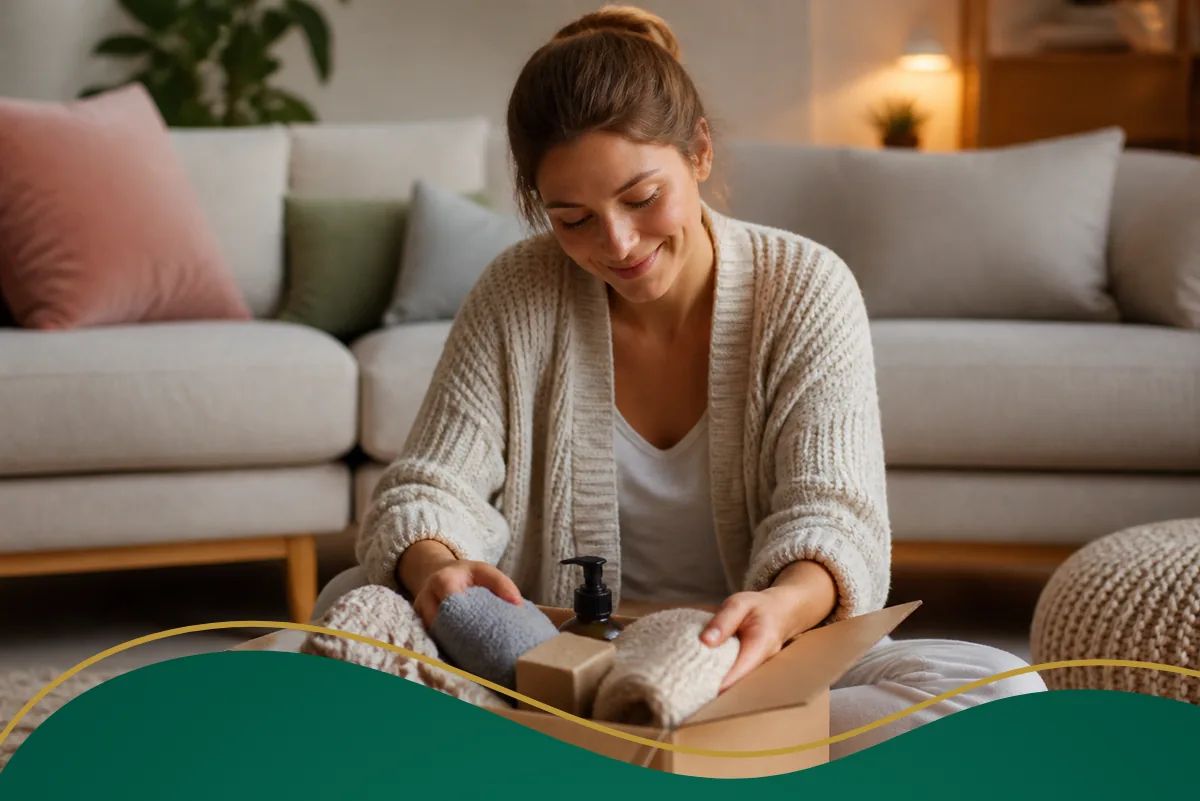
If you're wondering what to send someone in rehab, the safest answer is a small, approved package: a handwritten letter, one or two low-risk comfort items, and nothing that arrives as a surprise to staff. Residential centres inspect everything that comes in, so a well-meant parcel stuffed with snacks, toiletries or gadgets can easily be held, returned or binned before it ever reaches the person you're trying to support.
This guide is for the people on the outside: partners, parents, siblings and friends who can't visit but want to send something useful. It works through three simple categories, starting with items that are usually safe to send, then those you must check first because policies vary, and finally the ones that are almost always refused. It also covers how to package a parcel and what to write inside it, along with practical guidance on family visits during inpatient treatment for when in-person contact becomes possible.
Ask the centre first, before you spend a penny
Every residential rehab sets its own rules, and those rules shift depending on the setting. A detox unit is stricter than a later-stage residential programme, and what one clinic waves through, another will refuse on clinical grounds. Treatment stage, mail privileges, room storage and the person's own care plan all feed into the decision, which is why there's no universal list you can rely on.
The fix is a phone call or email to admissions, reception or the person's care team before you buy anything. Ask four things: do you accept packages from family, must items arrive sealed, are parcels opened and inspected, and do you require shipments from an approved retailer? Staff can almost always explain general package policy and name their restricted items, and they may even pass on something the person has been asking for during their stay.
Overseas treatment adds another layer, and supporting a loved one heading to rehab abroad means factoring in customs rules, import restrictions, unpredictable postage times, heat and humidity, and limited storage space, all of which affect whether a parcel arrives intact and whether it can be passed on. Anything medicinal or edible is particularly likely to cause problems once it crosses a border.
One more thing: resist the urge to surprise them. Ask what they actually need, then confirm that specific item with the centre, because a parcel refused at the door is a disappointment for both of you. It also helps to know that contact is sometimes paused altogether during detox or intensive phases of treatment, so ask when packages can realistically be received.
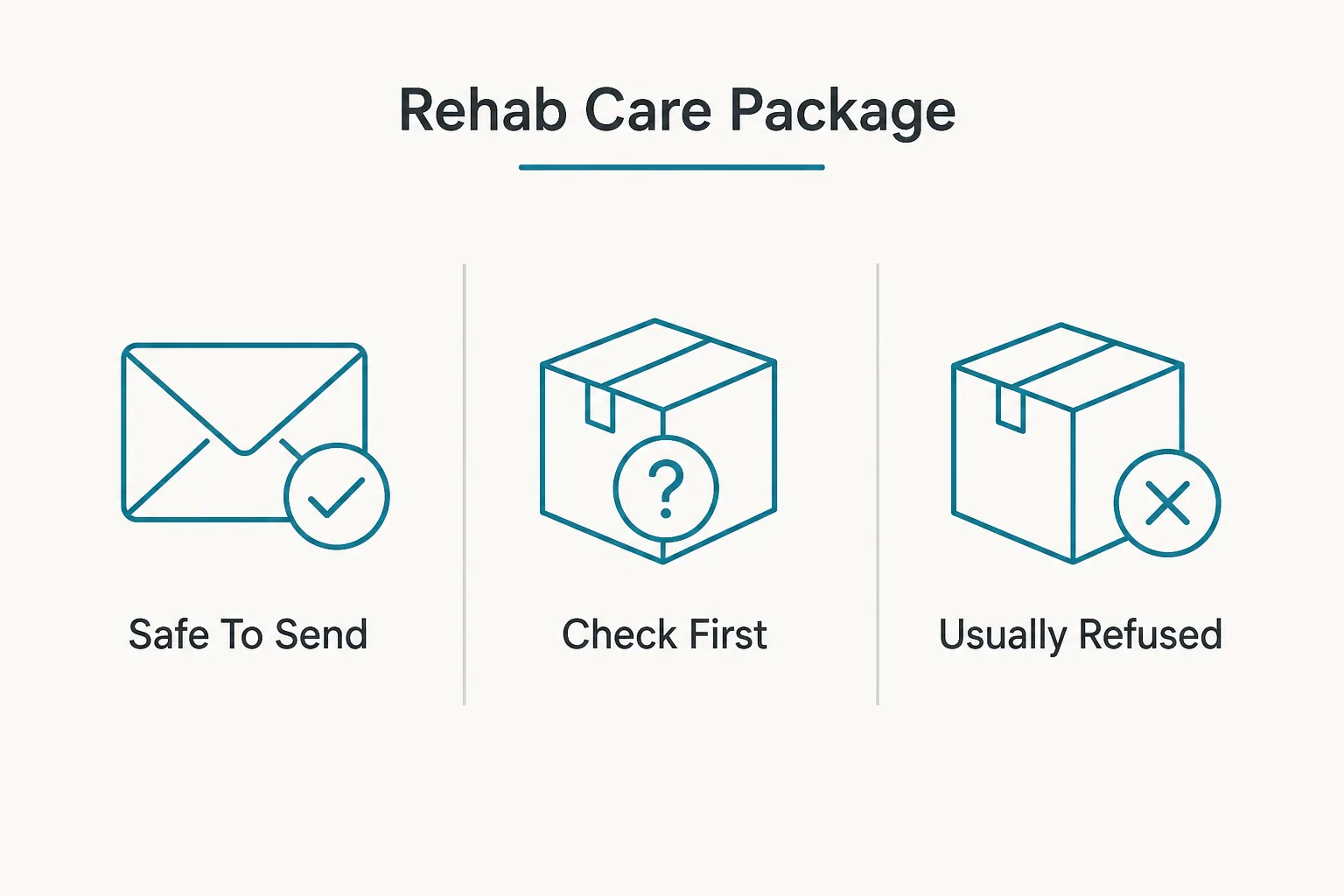
Usually safe: what to send someone in rehab without much risk
The lowest-risk gifts share a common quality, in that they're modest, practical and quick for staff to inspect. A big mixed hamper invites scrutiny; a small parcel with three clearly identifiable things does not.
Start with a handwritten letter or card. It's the single safest thing you can send, it fits nearly every mail policy, and it can be reread on the hard evenings when a phone call isn't possible. If you send nothing else, send this.
Beyond that, approved reading is a good bet, whether that's paperbacks, devotionals or recovery-friendly books, though some centres allow only certain genres, insist on paperback, or require books shipped directly from a retailer. Printed photos work well too, provided you screen them carefully: nothing showing parties, drinking, nightlife or conflict-heavy memories, and nothing so private you'd be uncomfortable with a staff member seeing it during inspection. Frames are often refused, so send the prints loose.
For downtime away from screens, a journal, notebook, puzzle book, crossword collection or colouring book with approved pens or pencils all tend to clear easily. Soft socks and simple, modest comfort items are usually fine if the centre permits clothing, but avoid slogans, substance or nightlife references, and anything revealing. Sealed toiletries can be acceptable where allowed, so choose alcohol-free products, mild or unscented, in their original unopened packaging. Finally, if the person has specifically asked for something practical, that's often the most welcome gift of all, as long as you confirm it with the centre before posting.
Check first: the items families most often get wrong
Check first doesn't mean never allowed. It means the item is commonly restricted, clinically sensitive, or simply awkward for staff to store and manage, so the answer depends on the centre.
Food and snacks head the list, and programmes restrict them for a range of reasons: allergies, prescribed diet plans, storage and pest control, and the fact that packaged food is a classic way to conceal contraband. Some clinics permit sealed, single-serve items while others refuse food outright, and where snacks are allowed, healthier options such as whole-grain crackers, snack bars, dried fruit or unsalted nuts tend to be better received than sweets. Caffeine sits in the same bracket, since coffee, energy drinks and stimulant-style products are limited in some programmes, and understanding the dietary provisions for patients in rehab at a specific centre can help families know what's realistic to bring in.
Supplements, vitamins, protein powders and herbal remedies need clinical approval because ingredients and interactions matter and labelling isn't always clear. Medication deserves far more caution again, so never post over-the-counter or prescription medicines casually. Ask the care team how medication must be supplied, labelled and administered, then follow their instructions exactly.
Safety-related items are the next group, because razors, nail tools, aerosols, perfume, cologne, glass bottles and strongly scented products can all raise misuse, injury or storage concerns. Electronics are similar, since many inpatient settings limit phones, chargers, headphones, smart watches and anything with a camera or internet connection to protect other residents' privacy and keep the focus on the programme. And where money is concerned, jewellery, cash, bank cards and valuables are frequently capped or held in secure storage, with many centres preferring a money order or cashier's cheque over cash in an envelope, sometimes with a limit on the amount.
Usually refused: what not to send to inpatient rehab
Some things are refused almost everywhere, and knowing them saves both money and awkwardness. Alcohol-containing mouthwash, hand sanitiser, aftershave, perfume and toiletries are among the most common rejections, simply because products with alcohol in the ingredients conflict directly with treatment rules. Check the label rather than the front of the bottle, since alcohol turns up in more everyday products than people expect.
Alcohol itself, illicit substances, and any medication that hasn't been cleared through the care team should never go in a parcel, full stop. The same applies to opened, decanted, unlabelled or homemade products, because staff have no way of verifying what's inside them. Vapes, cigarettes, tobacco, lighters and smoking supplies are best treated as prohibited unless the specific centre explicitly permits them and tells you how they must be supplied.
Then there's content. Pornography, revealing or explicit material, gambling-related items, drink or drug-themed novelty gifts, and anything likely to stir cravings will be pulled out, as will weapons, sharp objects, multi-tools, loose blades, candles and matches on straightforward safety grounds.
For anything not on the list, a simple test covers it: if an item could hide a substance, bypass clinical care, disrupt the programme, cause conflict, or make recovery harder in any way, leave it out. Breaking a facility's protocol can also cost you your own contact privileges, which helps nobody.
How to post it, and what to write inside
Address the parcel with the person's full name exactly as the centre holds it, plus any client or room reference they give you, the correct postal address, and your own name and return address on the outside. Put a note with your name inside as well, since outer packaging is sometimes removed during inspection. Keep your receipts, and keep quantities modest so staff can check and store everything easily.
Send items in their original sealed packaging, avoid glass where you can, avoid loose mixed products, and don't tuck anything in as a hidden surprise. Expect the parcel to be opened and inspected, and accept that anything outside policy may be held, returned or disposed of before the person sees it. That isn't staff being difficult; it's how a safe residential environment is maintained.
The message matters more than the contents, so write calmly. Tell them you're proud of the effort they're making, that you're thinking of them, and that you're there when they're ready, without demanding a reply. Anecdotes about home can help them feel connected, as long as the tone stays warm rather than wistful or boastful. What to avoid is just as clear: blame, guilt, unresolved arguments, ultimatums, instructions about how they should be doing treatment, dramatic family news, and repeated variations on "when are you coming home?" Those feelings are real and worth airing, but a letter into a treatment centre is the wrong place for them.
Before you seal the box, run five quick checks. The centre has approved what's inside, every item is sealed and low risk, the message is supportive and makes no demands, the parcel is clearly labelled with their details and yours, and nothing in there could undermine their treatment. If you're helping someone who hasn't yet gone in, our companion guide on what to pack for rehab covers what to bring on admission; this article is for those of you sending support from the outside.
No Comments