


16 Sep What to Pack for Rehab: The Complete Checklist
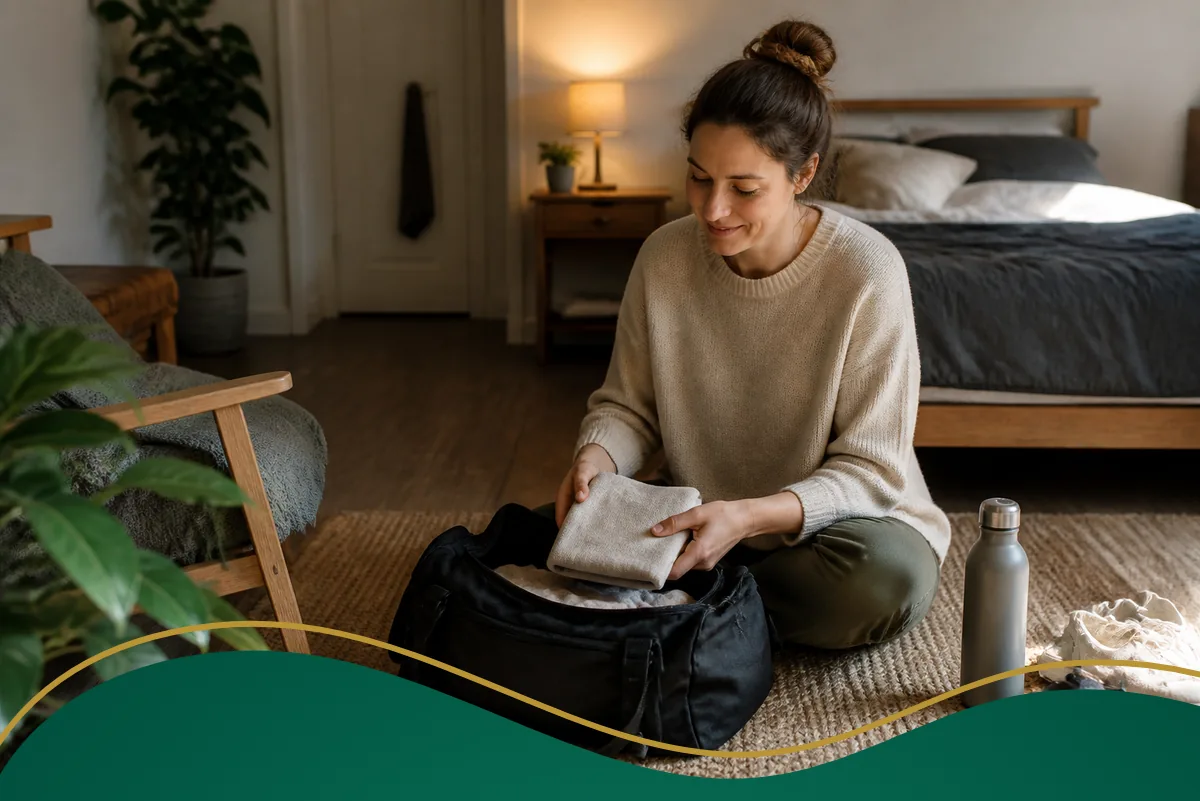
Most people preparing for treatment spend an hour worrying about clothes and roughly five minutes on their paperwork, when it really ought to be the other way round. A what to bring to rehab packing list for Bali has to work twice over: once as a checklist for a residential clinical stay, and once as a plan for an international trip involving a passport, an entry visa, a long flight and Indonesian customs rules that treat medication far more strictly than most travellers expect.
So this guide sets out what to pack by category, how to prepare your documents and prescriptions before you fly, how to dress for a hot, humid and culturally conservative island, and which items are better left at home because they cause problems either at the border or during the arrivals and admission process. The short version is simple enough: pack light, pack paperwork, and check anything you are unsure about before you close the case.
Your Bali what to bring to rehab packing list, by category
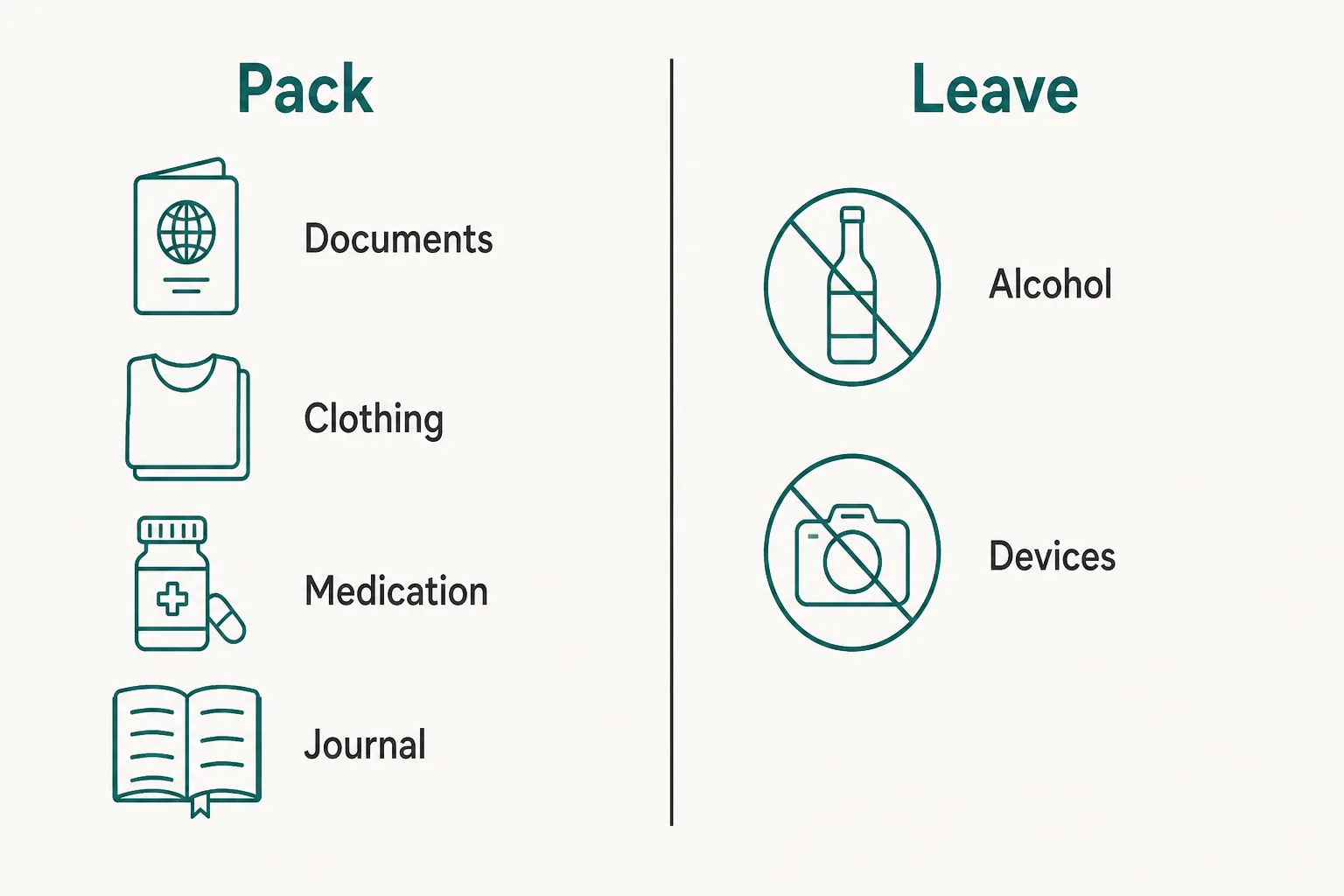
Travel documents. Passport, visa or entry approval, travel insurance policy number and emergency assistance line, flight itinerary, admission confirmation and the centre's address and phone number, a written list of emergency contacts, any medical letters the facility has asked for, and printed plus digital copies of all of it.
Clothing. Light breathable tops and bottoms, modest casual clothing for group sessions and outings, sleepwear, underwear and socks, activewear and trainers, sandals or slides, swimwear if the programme allows swimming, a compact rain layer, and one warmer layer for air conditioning and the flight itself.
Toiletries. Alcohol-free basics such as toothbrush, toothpaste, shampoo, body wash, deodorant and a hairbrush, ideally sealed or unopened if the centre requires it, plus high-SPF sunscreen, insect repellent, menstrual products, and a spare pair of glasses or contact lenses with your prescription details.
Medication. Everything in its original labelled pharmacy packaging, along with prescriptions, a doctor's letter, a written list of medicines and doses, and your prescriber's contact details. Bring only quantities that are lawful and approved for import.
Electronics. Phone, charger, a plug adaptor for Indonesian sockets, and headphones or an e-reader if the facility permits them. Assume device access will be limited, at least early on, and confirm before you pack.
Comfort items. A journal and pen, a couple of paperbacks, family photos and one familiar lightweight item. These small anchors make the first days easier without breaching anything, and thinking through these details ahead of time is part of supporting a loved one going to rehab abroad with practical, thoughtful care.
Money and cards. A debit or credit card, a modest amount of Indonesian rupiah for arrival, a backup payment method your family can access, and a written record of card numbers and important contacts kept separately from your wallet.
Sort your documents before you touch the suitcase
A forgotten toothbrush is a ten-minute problem in Bali, whereas a passport that expires too soon, or a visa that doesn't match your length of stay, can stop the trip entirely. That's why paperwork should be the first thing you deal with rather than the last.
Start by checking your passport against current Indonesian entry requirements rather than assuming that valid is the same as acceptable, since many countries require a minimum period of remaining validity. Then confirm the visa or entry route that applies to your nationality and to the length of your programme, because a stay of several weeks or months may need something different from a standard tourist arrival, and these rules change. Arrange travel insurance that covers medical treatment, cancellations, delays and emergency repatriation where relevant, and read what your policy actually excludes instead of assuming you're covered. Getting these details right is really just part of planning your trip to Bali, so it's worth working through them methodically before you book anything.
Carry printed and digital copies of the passport photo page, visa or entry approval, insurance policy, prescriptions, doctor's letters, flight details, the centre's contact details and your emergency contacts. Ask your prescriber or GP for any medical letters the facility has requested, covering current diagnoses, prescribed medication, allergies and any recent detox or hospital care. Finally, give one trusted person at home a copy of your itinerary and the admissions contact, so someone knows where you are and who to call.
Medication: original packaging, paperwork, and check the rules first
Medication needs more care than anything else in your bag, because you're crossing an international border and then handing your medicines to a clinical team. Keep everything in its original pharmacy packaging with the label intact, and resist the urge to tidy tablets into a weekly organiser for the flight, since unlabelled tablets are exactly what customs officers and admissions nurses cannot verify.
Alongside the medicines, bring the prescriptions and a doctor's letter stating each medicine's name, dosage, medical purpose and the prescriber's details, and keep that paperwork in your hand luggage where you can reach it. Some categories, including sedatives, opioid medications, ADHD medication and other controlled or regulated drugs, may require specific approval or may be restricted entirely, so check current Indonesian regulations well before you fly and declare medicines where declaration is required. A valid prescription from your own country does not by itself guarantee permission to import a medicine into Indonesia, and Indonesia enforces its drug laws seriously. This kind of clinical rigour around medication handling is one of the reasons behind why Bali is a leading rehab destination, since centres there are well practised in managing international arrivals safely.
Don't travel with someone else's medication, unlabelled tablets, excessive quantities, cannabis or CBD products, or supplements the centre hasn't approved. Once you arrive, expect staff to review, store and administer prescribed medication according to clinical policy, so the goal of packing well is a clean, documented handover rather than keeping medicines in your room.
Dressing for Bali's heat, humidity and cultural norms
Bali is tropical, warm and humid all year, so comfort comes from breathable fabric and easy laundry rather than a bigger suitcase. Light cotton or moisture-wicking tops and bottoms, loose layers, sleepwear, underwear, trainers for walks and activities, sandals or slides for everyday wear and a compact rain layer will cover almost every day of a programme, and one long-sleeved top or light jumper handles air-conditioned rooms and the flight home.
Sun and insects deserve their own small kit: high-SPF sunscreen, a hat, sunglasses, after-sun if your skin burns easily, and insect repellent. Keep skincare simple and check the centre's rules on product ingredients, since alcohol-containing toiletries such as mouthwash, aftershave and hand sanitiser are commonly restricted in treatment settings as a safety measure. Bring swimwear only if the programme allows pool or beach access, and choose something modest with a cover-up.
On quantity, pack roughly a week's clothing and rely on laundry rather than packing for the full stay. On culture, Bali is a place where dress carries meaning, so avoid very revealing clothing, anything with drug, alcohol or profanity references, and slogans that could offend. Temples and other culturally significant sites expect covered shoulders and knees, so one modest outfit that works for a visit is worth its space. Bulky bedding, pillows and towels are best left at home unless the centre specifically asks for them.
What to leave at home, and the questions to ask before you fly
Leave behind alcohol, illicit drugs, paraphernalia, any medication not prescribed to you, weapons, sharp items such as scissors or razors that the centre hasn't approved, large amounts of cash, expensive jewellery and irreplaceable valuables. In a Bali context, add unapproved controlled substances, cannabis and CBD products, unlabelled supplements and restricted medicines carried without checking current Indonesian rules, because the consequences at that border are far more serious than a confiscated item.
Then there are things that are perfectly legal but usually unwelcome at admission unless cleared in advance: strong fragrances, aerosols, alcohol-containing mouthwash or sanitiser, nail polish remover, candles and incense, outside food and drink, revealing or slogan clothing, and devices that could record other residents. Confirm phone, laptop, tablet, camera and smartwatch policies before departure, since device access is often limited early in treatment to protect your focus and other people's privacy, then sometimes reintroduced as the programme progresses.
Before you fly, get answers to these: Are nicotine products or vapes permitted, and under what conditions? Are vitamins and supplements allowed, and must they be unopened? Can I bring books, a journal and photos? Are snacks allowed? Which toiletries must be sealed? What happens to my medication, money, passport and valuables on arrival? And can forgotten items be bought locally or delivered to the centre, so I don't need to overpack out of nerves?
The concrete next step is straightforward. Before you close the suitcase, photograph anything you're unsure about, every medication box, supplement, device and comfort item, and send the list to the Calm Rehab admissions team asking for written confirmation of what is approved. That one message removes most of the anxiety people carry onto the plane, and it means nothing important gets stopped at the door.
No Comments