


16 Sep Signs of Alcohol Addiction: 12 Red Flags It’s Time to Get Help

Most people who develop a drinking problem never announce it, either to others or to themselves. They hide it, they minimise it, and they wait until something breaks, which is why the clearest signs of alcohol addiction are rarely the dramatic ones. More often they are quiet, repeated patterns sitting just under the surface of an otherwise ordinary life.
This article is not asking you to accept a label or to diagnose yourself on the strength of one heavy night. It gives you three things instead: a 12-point alcohol-specific self-check you can hold against real life, a calm way to weigh up what you find, and a clear view of when medical detox is the right step to take toward safe, professional support. If you are reading this with someone else in mind, there is a section for you too.
Alcohol addiction is about patterns, not one bad night
Alcohol use disorder is a medical condition in which someone struggles to control their drinking even when it is harming their health, work or relationships. It ranges from mild to severe and it does not look the same for everyone: for one person it might be occasional binge drinking, while for another it is steady heavy drinking or full physical dependence. What links them is the pattern of loss of control, preoccupation with alcohol and clear harm, with the drinking continuing anyway.
So a single blackout or one argument after a party is worth taking seriously, but it does not define someone. Repetition does. If the same thing keeps happening despite genuine intentions to stop, that is the signal worth acting on.
Asking yourself whether you are an alcoholic is far more common than most people realise, and it usually means some part of you has already noticed something. This is especially true among high-functioning individuals hiding addiction, who often mask the problem behind success and responsibility until it becomes impossible to ignore. You do not need to hit rock bottom to deserve help. Early recognition matters precisely because even a mild disorder can develop into a serious one, and identifying it sooner makes treatment more effective.
12 signs of alcohol addiction to check against real life
Read these slowly, and ask whether each one describes a pattern over the last six to twelve months rather than a single occasion.
1. Needing more alcohol for the same effect. Amounts that once felt excessive now feel normal. Rising tolerance is one of the clearest early markers of developing dependence, because the body has adapted and drinking has to escalate to produce the old result, or simply to feel functional.
2. Failed attempts to cut down. Dry January abandoned in week two, a promise of two drinks a night that lasts three days, a weekdays-only rule that quietly dissolves. Repeated unsuccessful attempts to cut back are a recognised warning sign.
3. Drinking more, or for longer, than intended. You plan one glass and finish the bottle, or you mean to leave at nine and leave at one. The gap between intention and outcome keeps widening.
4. Cravings or preoccupation. Thinking about the next drink during the working day, planning events around whether alcohol will be there, feeling restless or irritable without it, or finding that alcohol is the only reliable way to relax, cope or socialise.
5. Morning or daytime drinking. Drinking to steady your hands, take the edge off a hangover, get through the afternoon or feel normal again. This one rarely happens in isolation and usually points to physical dependence.
6. Blackouts or memory gaps. Losing whole stretches of an evening: conversations, journeys home, decisions, texts you do not remember sending. You may have seemed perfectly awake to everyone else at the time.
7. Hiding, lying about or minimising drinking. Bottles tucked away at home, in the car or at work, a drink before going out so nobody sees the real total, units under-reported to a GP or a partner, and defensiveness or anger when anyone comments. People hide what they already feel ashamed of and cannot control.
8. Neglecting work, family or responsibilities. Late starts, missed deadlines, careless mistakes, sick days after heavy nights, cancelled plans, school runs and duties dropped. Drinking has moved up the priority list.
9. Relationship conflict linked to alcohol. The same arguments on repeat, trust broken, apologies and promises that do not hold, and loved ones who have started worrying out loud or withdrawing whenever alcohol appears.
10. Risky behaviour while drinking. Driving after drinking, unsafe sex, aggression, accidents and injuries, or mixing alcohol with other substances or medication.
11. Withdrawal symptoms when not drinking. Shaking, sweating, nausea, anxiety, jumpiness, irritability, low mood or broken sleep that eases once you drink again. Drinking to avoid these feelings is one of the most serious warning signs of drug dependence on this list.
12. Continuing despite physical or mental health harm. Drinking on through worsening anxiety or depression, wrecked sleep, weight changes, liver results, injuries or a doctor's clear advice to stop.
How to weigh up what you have just read
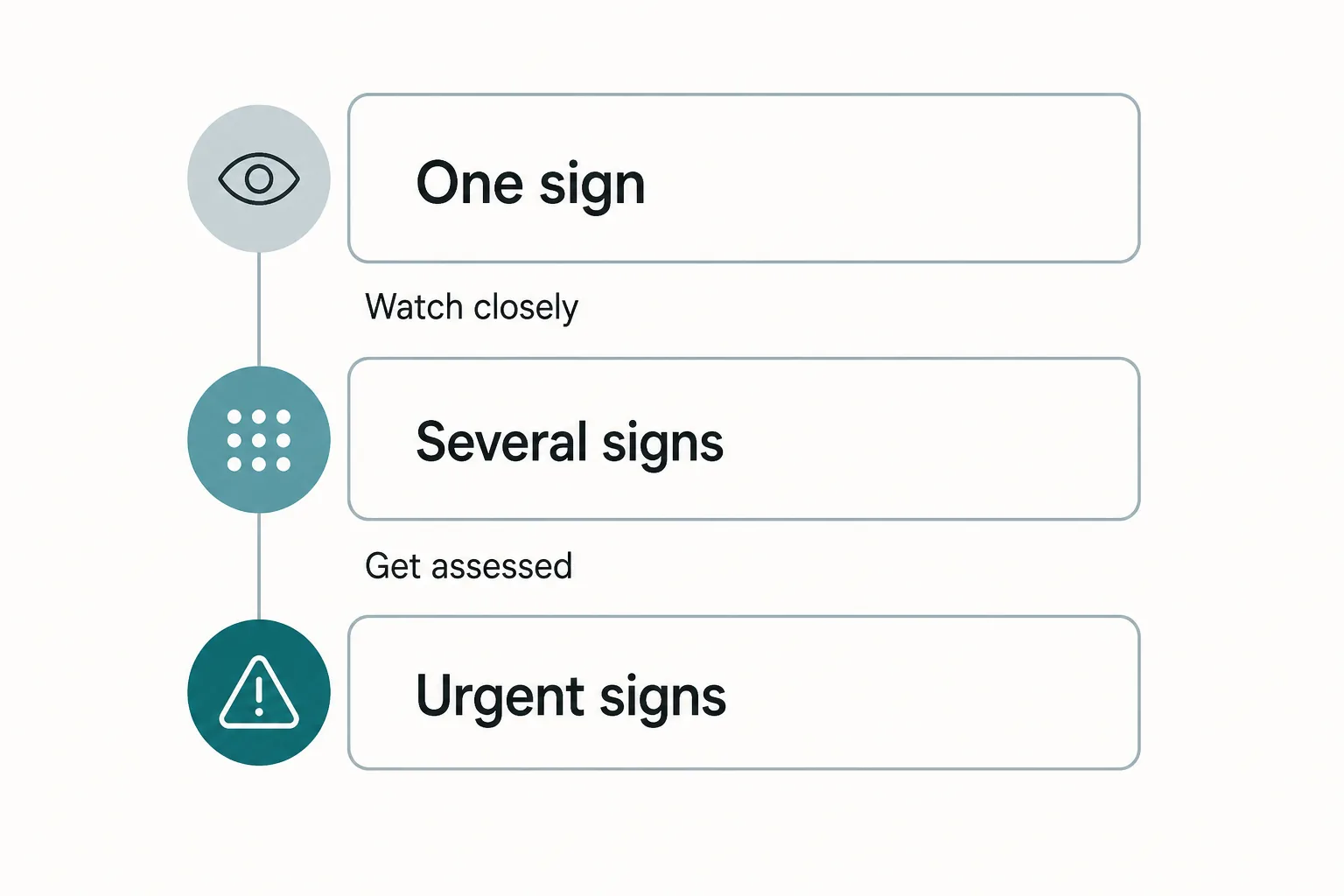
One sign is enough to pay attention to, particularly if it is new, getting worse, or already worrying you. It does not mean you are dependent; it means something has shifted and is worth watching honestly rather than explaining away.
Several signs appearing together is a different matter, because that combination describes a pattern rather than an incident, and patterns are what professional support exists to address. Some signs also carry more weight than others. Withdrawal symptoms, morning drinking, repeated blackouts, unsafe behaviour and drinking through clear medical harm should be treated as urgent rather than filed away for later, since they suggest the body has already adapted to alcohol and the risks are physical as well as behavioural.
The useful question is not whether you qualify as an alcoholic, because that framing turns a health issue into a character verdict, and shame is the main reason people delay getting help. Ask instead about frequency, direction and cost: how often is this happening, is it worse than a year ago, and what is alcohol currently taking from your health, your relationships, your work or your safety?
If you are worried about someone else's drinking
Do not open with a diagnosis. Arguing about whether someone is an alcoholic is a debate you cannot win and they cannot afford to lose, so it usually ends in denial. Point to patterns instead: the missed events, the hidden bottles, the mornings after, the repeated conflict. Specifics are much harder to dismiss than labels.
Choose a sober, calm moment and lead with concern rather than blame. Concrete examples work best, such as a birthday they missed or a health change you have noticed. Keep the focus on their wellbeing, encourage them to see a doctor for a proper assessment, and make clear that effective treatment exists and that you will help them find it.
Boundaries matter as much as the conversation itself. Decide in advance what you will not cover up, fund, excuse or tolerate, especially where anyone's safety is at stake, and say it plainly. In practice that means no false excuses to employers or family, no shielding them from natural consequences, and no drinking alongside them to keep the peace. None of this requires coldness or shaming; compassion and boundaries work perfectly well together.
The realistic aim of a first conversation is not immediate change, but breaking the secrecy and making it feel possible to ask for help. It may take a few attempts before someone is reachable, and a single moment of genuine contact can be what shifts the course of things.
Choose a safe next step today
If several of the twelve signs landed, start by getting an honest picture. For two to four weeks, record what you actually drink: amounts, timing, what triggered it, any cravings, blackouts, withdrawal feelings and consequences. Most people are surprised by their own numbers, and a written record is far more useful to a clinician than memory.
Then speak to your GP, an addiction specialist or a qualified mental health professional for a proper assessment, particularly if drinking has become daily or feels hard to control. An assessment is not a commitment to anything; it is simply how you find out what level of support fits.
One warning matters more than any other here: if you may be physically dependent, do not stop suddenly without medical advice. Alcohol withdrawal can be dangerous, and in its most severe form it can involve confusion, hallucinations and seizures. Medically supervised withdrawal exists precisely because stopping unaided can be riskier than carrying on drinking for another few days while you arrange help.
Depending on risk and need, support might mean structured counselling and behavioural therapy, a medically managed detox, residential rehab, relapse-prevention work or community-based recovery groups, often in combination, and for those wanting to step away from familiar surroundings entirely, specialist alcohol rehab in Bali offers a structured, medically supervised setting in which to do this. Seek urgent medical help immediately if there are seizures, confusion, hallucinations, chest pain, severe vomiting, thoughts of self-harm, violence, drink-driving risk or any other immediate danger.
The takeaway is simple enough. If alcohol is repeatedly overriding your intentions, damaging your health or your relationships, or creating safety risks, the safest move is to ask for professional guidance now. Recovery is genuinely possible, and with the right support most people either cut down substantially or stop altogether.
No Comments