


10 Nov How to Explain a Parent’s Rehab Stay to Children (By Age)

Children usually know something is wrong long before anyone tells them. They notice the silences, the changed routines and the parent who hasn't seemed like themselves, and if nobody explains, they fill the gaps with their own guesses, which are often worse than the truth.
So if you're about to start residential treatment, or you're the caregiver staying at home, the real question isn't whether to say something but how to explain rehab to a child without lying, frightening them or leaving them feeling responsible. It also helps to understand how families heal together, because a child's reaction is shaped by the whole family around them.
This guide gives you ready-to-use wording for each age group, calm answers to the questions children most often ask, and a practical plan for routines and contact while a parent is away for several weeks, including when treatment is overseas.
How to explain rehab to a child: the rules before you talk
The foundation is simple: tell the truth, but keep it short. Children need an honest explanation they can hold on to, not adult detail about how much was used, arguments at home or previous attempts to stop. A plain sentence does most of the work: 'I've been having a problem with alcohol (or drugs), and I'm going to a place where people help me get healthier.'
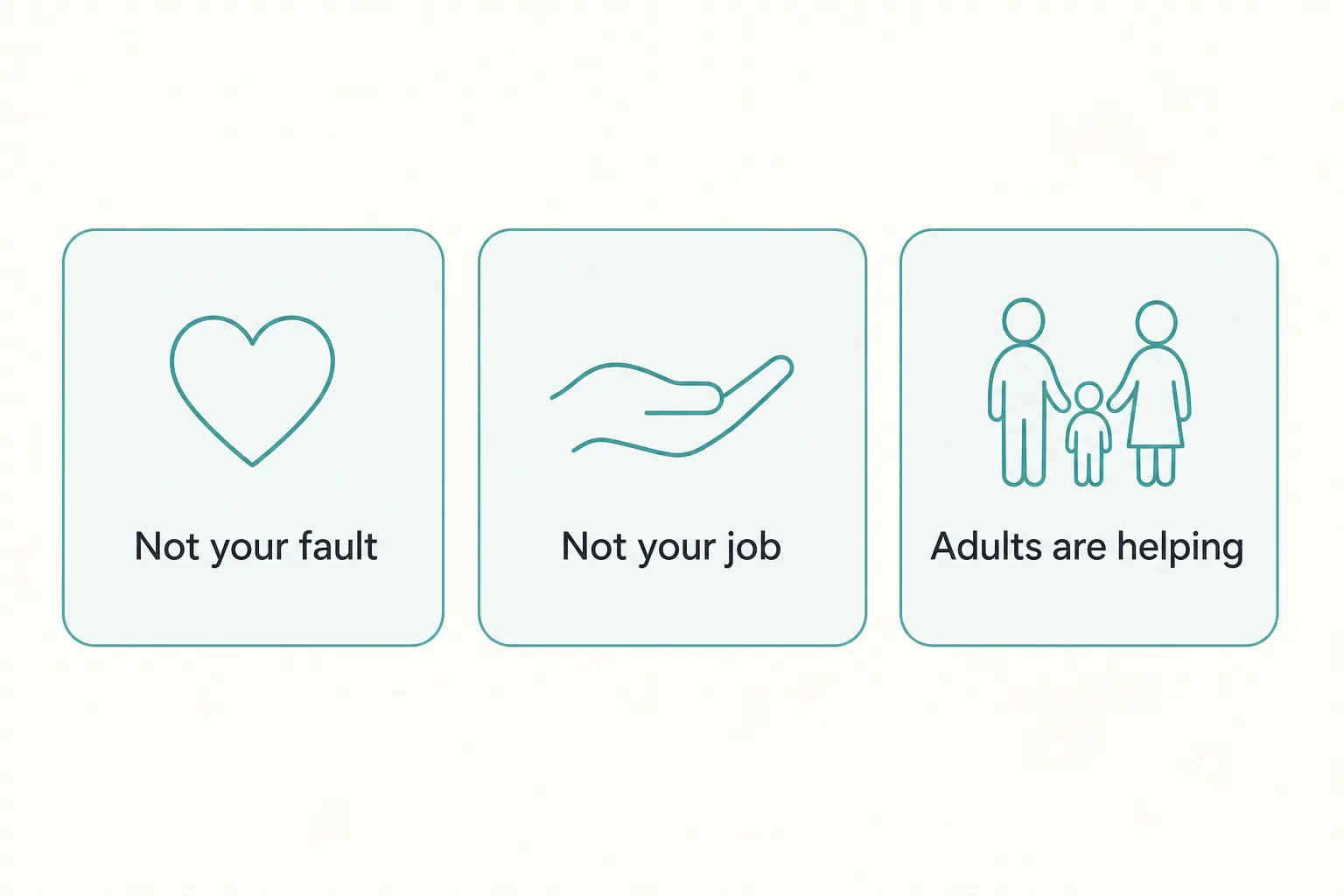
The second message matters just as much, and it needs repeating, because children who feel guilty often have to hear it several times before they believe it: 'You didn't cause this. You can't fix it. Grown-ups and helpers are taking care of it.' Older children in particular can slip into a parent-like role, feeling it's up to them to hold the family together, so release them from that job out loud.
Steer clear of blame and frightening language, because words like 'bad', 'weak' or 'hopeless' tend to land as shame, either on the parent or on the child who loves them. Instead, match the detail to the child's age, maturity and temperament, your family's cultural context, and what they've already seen or overheard.
Finally, choose a calm, unhurried moment, ideally with the main caregiver beside you so the child can see who will be there. This is a key part of supporting a loved one in rehab abroad when children are involved. Don't be surprised if they ask almost nothing at first. Questions often arrive days later, at bedtime or in the car, and that's a sign the conversation is working.
Age-by-age scripts for telling children a parent is in rehab
Toddlers and preschoolers need concrete facts and reassurance rather than explanation. Try: 'Daddy is going away for a little while to get help from doctors and helpers. You're safe. I love you. Grandma will take care of you, and your bedtime and nursery will stay the same.' A word like 'addiction' means little at this age, so focus on where the parent is, who's looking after them and when the next call or update will happen. Some little ones find it easier to listen while drawing or colouring, which stops the moment feeling too intense.
Primary-school children can handle a simple explanation of the problem and the help. Try: 'I have an illness that makes it hard for me to stop drinking (or using drugs) by myself. I'm going to treatment so I can learn how to be healthier. This isn't because of anything you did.' Children this age often worry about practical things, so anchor the conversation in those: who does the school run, where they'll sleep and who they can talk to if they feel worried. Then invite questions and answer them plainly.
Pre-teens have usually noticed more than you think, so acknowledge it. Try: 'You might have seen that I haven't been myself. Alcohol has become a serious problem for me. Rehab is a place where I'll get help, talk to counsellors and learn how to stay well.' Be honest about uncertainty rather than promising a fixed outcome: 'I'm planning to be away for about five weeks, and we'll tell you if anything changes.'
Teenagers deserve directness and respect. Try: 'I have a substance use disorder and I'm going into residential treatment. I know my behaviour may have hurt or confused you. You don't have to pretend this is fine, and you're allowed to feel angry, sad or relieved.' Many teenagers are relieved to hear a parent is finally getting help, while others go quiet or angry. Don't push for an immediate reaction; offer choices instead, such as talking later, writing questions down, speaking to another trusted adult, or joining family therapy if the programme offers it.
Whatever their age, prepare them for the return as well, because coming home is a step rather than a finish line. For younger children: 'When I come home, I'll still be working on getting better, and we'll be together again.' For older children and teenagers, be more specific about what may change: 'When I'm back, some things will be different, like sessions or meetings I go to. Getting well takes time, and we'll keep talking about it.'
Explaining a rehab stay away from home or overseas
When treatment means travelling, for example to residential drug and alcohol rehab in Bali, children need to understand why, for how long and what stays the same. Keep the reason child-centred: 'I'm going to another place because it has the kind of help I need, and it gives me time to focus on getting well.' Then give them a time frame they can picture, while leaving room for the clinical team to adjust it: 'The plan is about six weeks. If that changes, Mum will tell you.'
Be specific about care, because specifics calm children far more than general reassurance does. Name the person looking after them and list what will carry on as normal: home, school, pets, football or dance, bedtime routines, weekend plans and the familiar adults in their life.
Distance can feel like abandonment to a child, especially when a parent is in another country, so say the opposite plainly: 'I'm far away, but I'm still your parent and I still love you.' It also helps to prepare them for practical limits, such as a time difference, quieter early days while the body adjusts, busy therapy schedules or set phone times. Frame these as part of how the help works rather than as a punishment: 'The helpers keep my days busy so I can concentrate on getting better.'
In separated, blended or shared-care families, try to agree the explanation between the adults beforehand so the child hears the same story in both homes. However strained things are, this conversation isn't the place to criticise the other parent.
Calm answers to the questions children often ask
'Is it my fault?' 'No. Nothing you said, did or felt caused this. It's an adult health problem, and adults are responsible for getting help.'
'Are you sick?' 'Yes, in a way. Alcohol has been affecting my body, my mind and my choices, and I'm getting help so I can be healthier.' It can be worth adding that this isn't something they can catch, like a cold.
'Will you die?' This is the one that frightens parents most, so answer honestly and calmly without false guarantees: 'The reason I'm getting help now is to become safer and healthier. The people helping me know how to care for this problem.'
'When are you coming back?' Give the planned date or range and link it to something they can see: 'The plan is after your school sports day. We'll mark it on the calendar, and if it changes, we'll tell you.'
'Can I talk to you?' Describe the real contact plan, not the one you're hoping for: 'We hope to speak on Sundays and Wednesdays, if the programme says it's OK. If I can't call, it doesn't mean I've stopped loving you.'
'Will things be normal afterwards?' Avoid promising perfection: 'Some things may feel better, and some may take time. We'll keep talking, and the grown-ups will help our family adjust.'
When you genuinely don't know, say so: 'I don't know yet, but I'll find out what I can and tell you.' An honest 'I don't know' protects trust far better than a confident guess that turns out to be wrong.
Keep them steady while you're away, and know when to get more support
Stability comes from planning before admission rather than improvising afterwards. Agree who the main caregiver is, who handles transport, meals, bedtime and activities, who the emergency contacts are and whether school needs to know, and decide which adult answers questions about the treatment so the child isn't given different versions.
A calendar or countdown helps younger children see time passing, and you can mark planned call days and the expected return window on it. Use it lightly, though, because the aim is to show the days moving, not to turn each one into a test of whether the parent is 'nearly fixed'.
Plan connection around what the programme actually allows, including how family visits during inpatient rehab are handled. Check the clinical rules on calls and messages before promising anything, then fill the gaps with letters, drawings, photos, short voice notes or updates passed on by the caregiver. It's worth preparing for missed contact in advance, too: 'Sometimes I might not be able to call because I'm in treatment or the timings are different that day. If that happens, Grandma will be with you, and we'll try again when we can.' Meanwhile, the caregiver can check in gently without interrogating, with questions such as 'What have you been wondering about?' or 'What feels different this week?'
Tell a teacher, coach or relative only what they need to know to support the child, particularly if concentration, behaviour or attendance starts to slip. Some upset is normal, but watch for signs that a child needs more help: persistent fear or anger, withdrawal, sleep problems, regression in younger children, clinginess, unexplained stomach aches or headaches, risk-taking, school refusal or major changes in behaviour. If these persist or escalate, or the child can't seem to feel safe despite reassurance and routine, speak to your GP or a child mental health service, and ask whether the treatment programme offers family therapy.
Your child doesn't need every detail. What they need is truthful words, reassurance repeated more often than feels necessary, steady adults around them and a realistic way to stay connected while you get well.
No Comments