


10 Nov 25 Sober Hobbies to Fill Your Time in Early Recovery
The hardest part of early recovery often isn't the daytime. It's the stretch between finishing work and going to bed, or that long Sunday afternoon, when the hours once filled by drinking, using, recovering from use or old social routines suddenly sit empty. Sober hobbies won't fix everything, but they can make those hours feel far less exposed.
If you feel flat, unmotivated or unsure what you even enjoy any more, that's normal, and it isn't a character flaw. Part of healing is rediscovering passion and purpose, and the aim isn't to cram every evening with activity; it's to have a few realistic, low-effort options ready for the moments you know are vulnerable. Below you'll find 25 ideas grouped by what you need most, each with a small first step, plus a simple way to pick one for tonight, one for your routine and one for connection.
Why empty time can feel risky in early recovery
Substance use takes up a surprising amount of time once you add up getting hold of it, using, hiding it, socialising around it and recovering afterwards. When that stops, a large gap opens up, and because your brain is still adjusting in early recovery, ordinary evenings can feel unusually dull or uncomfortable. Research indicates that apathy is a common predictor of relapse, and boredom, loneliness and restlessness tend to cluster in exactly those unstructured hours.
None of this means you're failing if you feel bored. It simply means unplanned time deserves a plan. Structure, supportive contact with other people and activities that feel meaningful all reduce how often you end up alone with a trigger, which is why they sit alongside the rest of your recovery support rather than replacing it.
25 sober hobbies grouped by what you need most
Treat this as a menu rather than a challenge. You don't need to try all 25, or even five; picking one or two to test this week is plenty. Each idea comes with a small first step, because a vague intention like 'get into yoga' rarely survives a tired evening, whereas 'press play on a ten-minute video' usually does.
The groups are organised by purpose, so if you already know what you're short of, whether that's company, movement, calm or a sense of progress, you can head straight there.
Social connection
Recovery-friendly meet-ups or fellowship events are the most direct route back to people who understand. Rather than trying to rebuild an entire social life at once, start with one regular weekly meeting, or the coffee afterwards in a substance-free setting.
Volunteering builds connection into your calendar, so choose a predictable two-hour shift at an animal shelter, food bank, beach clean-up or community project. It helps the helper too: one study found depressive symptoms fell significantly once people in recovery began helping others.
A book club gives conversation a ready-made topic. Join a library, online or local group, and read a manageable number of pages before the first session so you arrive feeling prepared.
If you feel socially rusty, a community class in cooking, art, language or photography works well because the structure carries the conversation for you. Just book one beginner session to start.
A sober games night lets you socialise on your own terms. Invite one or two safe people round for board games, cards or trivia, with alcohol-free drinks and a clear start and finish time.
Physical movement
Movement earns its place because research suggests physical activity in recovery can produce an acute reduction in cravings and urges. Walking is the easiest start: plan a 20-minute route that begins just before your usual craving window, and stick with the same loop until it becomes automatic.
Hiking or nature walks add daylight and a change of scene. Pick an easy, well-marked trail and go in daylight, ideally with a sober friend if isolation is one of your triggers.
Yoga or Pilates can be tested cheaply by trying a 10 to 20-minute beginner video at home before you pay for classes.
Swimming or cycling work best when they stay low-pressure, so think casual laps or a short, flat ride rather than fitness targets set too early.
Dance or martial arts fitness suits restless energy. Book a beginner class and count simply turning up as the win, not performing well.
Calming and grounding
Meditation or breathwork is the quickest tool on this list. Keep a five-minute guided audio saved on your phone and use it the moment cravings, anxiety or agitation first appear, rather than waiting until they peak.
Gardening or houseplants give you something living to tend, and you can begin with one herb pot, a succulent or a small patch instead of a major garden project.
Jigsaws, crosswords or Sudoku absorb the mind without overstimulating it. Leave one puzzle out where you can see it, so it's ready on evenings when your thoughts are loud.
Birdwatching or nature spotting pulls your attention back into the present. On a short walk, see if you can identify three birds, trees or plants.
Creative expression
Journalling or creative writing helps you process what's happening rather than just endure it, and journalling in recovery can be especially valuable for that reason. Write for ten minutes using a prompt such as 'what I need tonight' or 'what I am learning about myself'.
Drawing or painting needs no talent to be useful. Buy a small sketchbook or follow a free tutorial, and aim to finish something rather than make it good.
Music can be both practice and protection, whether you learn three chords, spend ten minutes on scales or build a calming playlist specifically for high-risk evenings.
Photography only needs a phone camera. Give yourself a simple theme, such as shadows, colour, food, nature or small daily recovery moments, so you have a reason to look closely at your day.
Skill-building
Cooking or baking also helps your body recover, since substance use often leaves people poorly nourished. Pick one simple recipe for the week and cook it before the evening slump sets in.
Language learning rewards consistency over intensity, so use a free app for ten minutes a day and tie it to an existing routine, such as straight after breakfast.
Coding or digital skills can open doors to work or study. Try one beginner lesson online, and stop before frustration turns it into another source of stress.
DIY, sewing or repair gives you a quick, visible sense of progress. Start with something small, like fixing a button, organising your tools or repainting a shelf.
Low-cost or at-home options
Reading or audiobooks cost nothing with a library card, and because audiobooks pair so well with walking, cleaning or winding down, they're easy to slot into the day.
Knitting, crochet or origami keep your hands busy during cravings or anxious evenings. Choose a beginner pattern so the focus feels soothing rather than demanding.
Chess, strategy games or learning games offer structured focus without leaving home, whether you use an app, a puzzle book or a free beginner lesson online.
How to choose the right activity for your mood, energy and relapse risk
The right hobby depends on what you're feeling at the time, so match the activity to the need rather than to what you think you should enjoy.
For cravings, choose something immediate and physical or hands-on, such as walking, breathwork, a puzzle or knitting, and consider calling a safe person before you start. For loneliness, go for scheduled connection like volunteering, a class, a book club, a walk with someone supportive or a mutual-help meeting, because spontaneous plans tend to fall through when you feel low. Restlessness calls for movement with a clear end point: a 20-minute walk, a swim, a bike ride, a dance class or a beginner workout.
When your mood is low, pick something low-effort with a visible finish, like cooking one meal, watering the plants, completing one section of a puzzle or reading a single chapter. If anxiety or social worry is the issue, look for predictable, structured settings where conversation is optional at first, such as a class, a yoga session, a library group or an online hobby community.
If you're rebuilding your sense of who you are, creative and skill-building hobbies like music, writing, photography, language learning or DIY let you become more than your recovery status. And to replace a substance-linked routine, identify the old cue, time and place, then swap in a safer activity at the same time but somewhere different; if you always drank at 6pm on the sofa, a 6pm walk gets you out of that room. Whatever you choose, steer clear of anything set in pubs, bars or alcohol-centred events, however harmless the hobby itself seems.
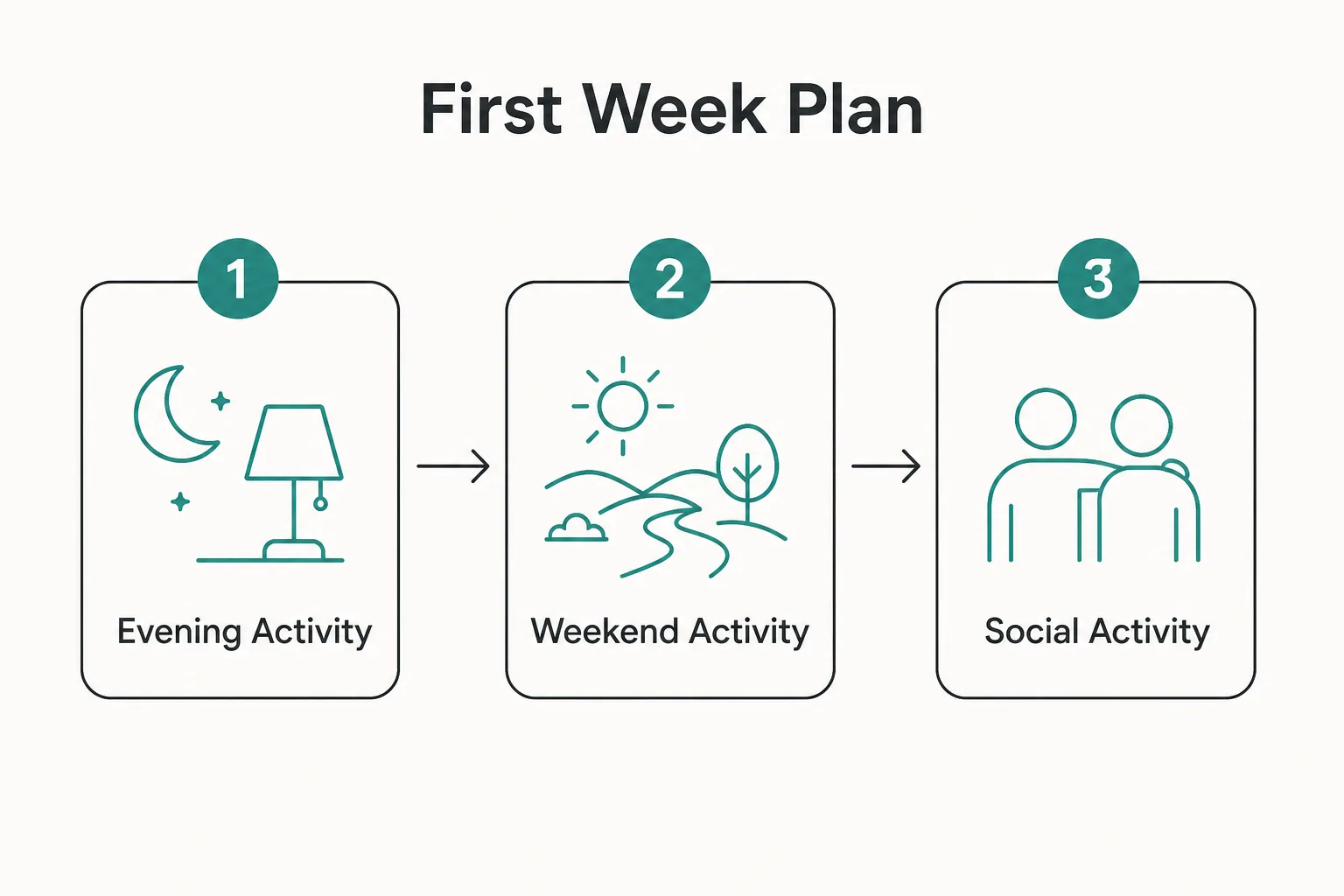
A simple first-week starter plan
Keep the first week deliberately small by choosing just three things:
1. One evening activity for your most vulnerable time of day, lasting 20 to 30 minutes, with any supplies set out in advance so there's nothing to decide when the moment arrives.
2. One weekend activity that adds structure, daylight or movement, such as a nature walk, a class, a volunteering shift or a sober plan with a friend.
3. One social or supportive activity, such as a recovery meeting, a class, a book club, a volunteer session or a walk with someone you trust.
Keep the barriers low throughout, which means free or cheap, close to home, beginner-friendly, substance-free and easy to repeat. Then treat the week as an experiment: jot down what helped with cravings, mood, energy and sleep, and at the end of the week keep, swap or simplify each activity.
If you miss a day, that's information, not failure. Just restart with the smallest possible version, even if that's five minutes.
Use hobbies as support, not a substitute for recovery care
Hobbies can fill risky time, lift your mood and help you rediscover who you are, but they don't replace structured aftercare support after rehab, counselling, prescribed medication, meetings, a relapse prevention plan or professional support. Think of them as one strand of a wider safety net. If cravings ever feel unmanageable or you feel at risk of using, contact your counsellor, aftercare team, sponsor or a trusted support person straight away, and use local emergency services if you're in immediate danger.
It also helps to share your plan with one supportive person, particularly for evenings, weekends and known trigger dates such as anniversaries or holidays, so someone knows when to check in. Then make it concrete before you close this page by choosing one thing to do tonight, one to repeat every week and one that involves safe connection with another person.
No Comments