


23 Jul Medication-Assisted Treatment vs Holistic Therapy for Anxiety and Addiction: Do You Have to Choose?

If you or someone you love is dealing with both anxiety and substance use, the choice between medication and holistic treatment for addiction can feel like a fork in the road: take the prescription and worry you’re somehow cheating, or go the natural route and worry it isn’t enough. The short answer is that you almost never have to choose. Medication-assisted treatment and holistic therapy aren’t mutually exclusive, and many people recover best on an integrated plan that a clinician supervises. Because the two work on different problems, and because of the well-documented link between mental health and substance abuse, combining them thoughtfully tends to be safer and more sustainable than either one alone.
This article explains what each approach can realistically do, when combining them makes sense, which safety factors should shape the plan, and the exact questions to ask a provider before you decide.
Medication vs holistic treatment for addiction: why it isn’t an either/or choice
The most useful question isn’t “natural or pharmaceutical?” but “what does this particular person need to stabilise, reduce risk and build lasting recovery skills?” Framed that way, medication and holistic care stop competing and start doing different jobs. That’s why treatment centres increasingly blend the two rather than forcing a choice; a common pattern is to begin with medical detox and therapy, then gradually add practices like mindfulness, yoga or expressive arts as the person stabilises.
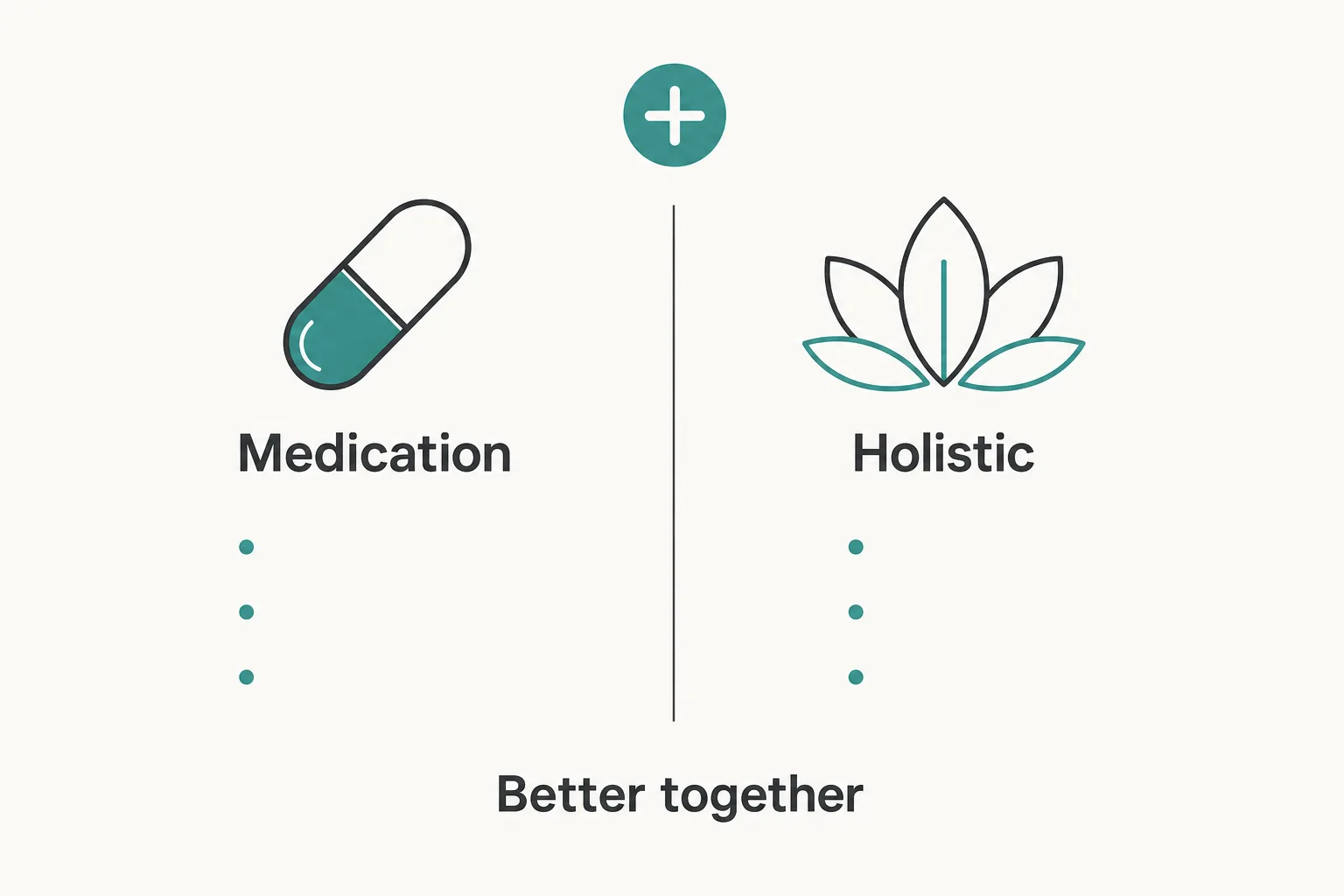
An integrated plan might combine prescribed medication, individual and group therapy, medical monitoring, relapse prevention and lifestyle support with holistic practices such as meditation, movement or nutrition guidance. The key boundary is this: holistic therapies can complement evidence-based medical care, but they shouldn’t replace the medications used during detox or supervised detox where there’s significant withdrawal risk, severe dependence or a co-occurring mental health condition that needs clinical treatment. Personal preference genuinely matters, and a plan you believe in is one you’re more likely to stick with, but safety and suitability come first.
What medication-assisted treatment can do for addiction and anxiety
Medication-assisted treatment can reduce cravings, ease or prevent dangerous withdrawal, support stability in early recovery and lower relapse risk for some substance use disorders. For many people it isn’t the finish line; it’s what creates enough steadiness to engage in therapy, rebuild routines and actually practise the coping skills that holistic work teaches.
What’s prescribed depends heavily on the substance involved, since opioid, alcohol, benzodiazepine and stimulant-related problems call for very different clinical responses. That’s one reason self-directed or one-size-fits-all approaches are risky. Anxiety needs its own careful assessment too. Medication may be appropriate when someone has a diagnosed anxiety disorder, severe symptoms, panic attacks, insomnia or distress that’s driving them back to substances, but that call belongs to a qualified prescriber who can see the whole picture.
It helps to name the stigma directly: taking medication is not a shortcut and not a sign of failure. Recognising addiction as a medical condition reframes medication as a clinical tool, and like any tool it needs oversight. That means ongoing monitoring, dose reviews, side-effect checks and close attention to interactions with alcohol, other drugs, supplements and any existing prescriptions.
What holistic therapy realistically adds to recovery
Holistic therapy is best understood as supportive care that helps a person regulate stress, reconnect with their body and build steadier daily patterns. Since stress is one of the most common triggers for a return to substance use, this isn’t a soft extra; it’s doing real work on relapse risk. Practices such as mindfulness, breathwork, yoga or gentle movement can support anxiety management, emotional regulation, body awareness and the ability to sit with distress rather than reach for a substance.
The everyday foundations count too. Sleep, nutrition, exercise, relaxation and a reliable routine all reduce the vulnerability to cravings and emotional overwhelm that tends to spike in early recovery. Creative, somatic and wellness-based therapies can also make treatment feel less coldly clinical, which matters a lot when anxiety, trauma or chronic stress are part of the picture and a person struggles to engage otherwise.
The boundary has to stay clear, though. Holistic therapies don’t medically manage dangerous withdrawal, and they don’t replace prescribed medication when it’s indicated. Their impact can also vary from person to person and take time to show; yoga might calm one person deeply and do little for another. They work best when delivered or recommended by providers who understand addiction and mental health risk, as part of a supervised plan rather than instead of one.
Safety factors that should shape the plan
Before recommending medication, holistic support or a blend of both, a good provider assesses the specifics of the situation rather than reaching for a template. That means looking at which substance is used, how much and how often, how long use has continued, any history of previous withdrawals or overdose, and the pattern of past relapses.
Withdrawal risk is the first priority. Where alcohol, benzodiazepines, opioids or several substances together are involved, withdrawal can be medically dangerous, and it isn’t something to manage with holistic methods alone. Mental health factors sit alongside this: an anxiety diagnosis, panic symptoms, trauma history, depression, and any suicidal thoughts or self-harm risk all shape the plan, as does whether the anxiety appears to be substance-induced or a separate, standing condition. This overlap is common, and understanding when anxiety and addiction are connected helps a provider treat both together rather than in isolation. Medical suitability matters just as much, including current prescriptions and possible interactions, supplement use, pregnancy or breastfeeding, liver or kidney problems, heart concerns and other health conditions.
Finally, the plan isn’t fixed. What’s safe and necessary during detox or the first weeks of recovery is often different from what’s most useful later in maintenance and relapse prevention, so expect it to be reviewed and adjusted as things change.
The questions to ask before you commit
Use these questions to pressure-test any programme before you decide. First, ask whether the approach is evidence-based and how the team decides when medication, therapy, detox or holistic support is clinically appropriate; you want reasoning, not a sales pitch. Second, ask who prescribes medication, how often it’s reviewed, how side effects and interactions are monitored, and what happens if symptoms get worse. Third, ask which holistic therapies are offered, who delivers them, what each is meant to help with, and whether any are optional if they don’t feel safe or useful to you.
Then check for genuine integration. Ask how anxiety and addiction are treated together rather than in separate silos, and whether the centre offers dual diagnosis support or a clear referral route into mental health care. Ask, too, how progress is measured, whether that’s cravings, substance use, anxiety symptoms, sleep, day-to-day functioning, medication response, relapse risk or your own feedback.
One last thing worth holding onto. Choosing medication isn’t a failure, and choosing holistic supports doesn’t mean you’re treating this as less serious. The best plan isn’t the most natural one or the most clinical one; it’s the one that’s safe, individualised, evidence-informed and sustainable enough that you can actually live it. If a provider can talk you through the questions above with honesty and specifics, you’re in a good place to decide.
No Comments