


23 Jul Gambling and Alcohol Addiction: Why These Two So Often Go Hand in Hand

If gambling and drinking seem to be happening together, that isn’t a coincidence, and it certainly isn’t a sign of weakness or poor character. Alcohol problems are the most frequently reported companion to a gambling problem, and research shows the two occur together far more often than chance would predict. There are predictable reasons for that, because the two behaviours share psychological and biological wiring and tend to happen in the same places at the same times.
This article looks at why gambling and alcohol addiction overlap, how each behaviour can intensify the other in a feedback loop, the warning signs that they are reinforcing one another, what can happen when one addiction replaces another, and why any support worth having should tackle both together rather than treating one and hoping the other fades.
Why gambling and alcohol addiction lock into the same reward-and-relief loop
At their core, alcohol and gambling pull on the same levers. Both stimulate the brain’s reward pathways, create urges or cravings, and offer a quick hit of excitement, escape or relief from difficult feelings. Researchers point to overlapping brain systems, including the dopamine-driven reward circuitry, as a likely reason people can be vulnerable to both. Both also carry the hallmarks of addiction: a strong wish to keep going, a loss of control, and the tendency to continue despite the damage being done.
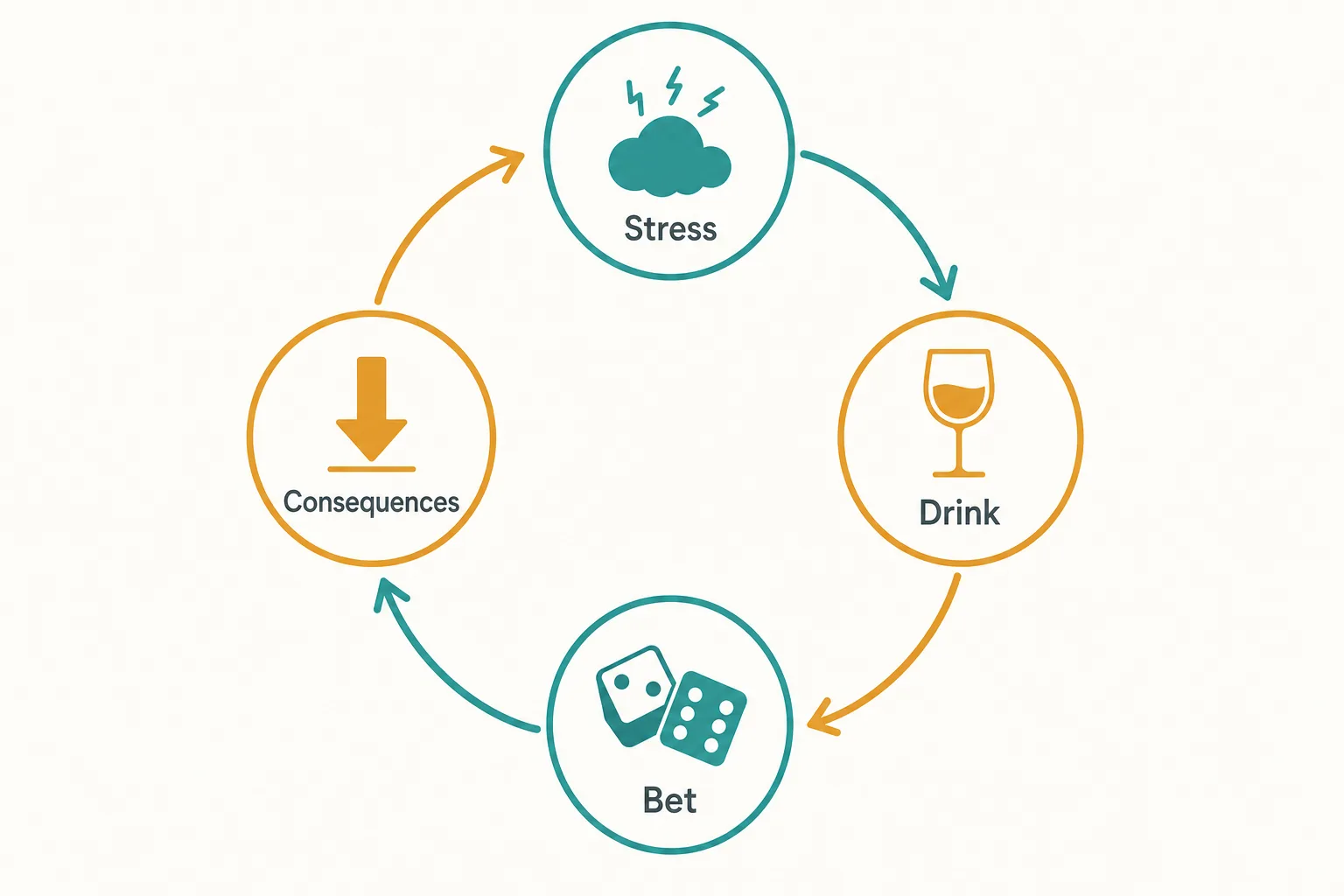
That matters because both behaviours tend to narrow a person’s focus onto the immediate reward, while the longer-term costs, such as debt, arguments, health problems or shame, fade into the background. The trap is a loop. Stress or low mood prompts a drink or a bet, the behaviour brings temporary relief or a rush, and then the consequences, whether a hangover, a lost pay packet or a difficult conversation, generate fresh stress that strengthens the urge to reach for the same relief again. This is a clear example of how coping habits turn into addictive behaviours, as each turn of the loop makes the next one more likely.
How alcohol can make gambling riskier in the moment
Alcohol lowers inhibition, and that is exactly what makes it harder to pause, walk away, stick to a budget or honour a limit you set for yourself while sober. Studies link alcohol intake with impaired decision-making and with less self-reflection about the consequences of a choice, which is a poor combination at a betting shop, a casino table or a phone app.
Intoxication also distorts judgement. Because alcohol tends to restrict attention to the most immediate, obvious cues, a person may underestimate the odds, overestimate their control and give little weight to the losses already stacked up. That is fertile ground for chasing losses, because after a few drinks the urge to win it back can feel far more convincing than the rational decision to stop. One study found alcohol was associated with greater spending on gambling and with gambling problems. In practice, drinking can mean larger bets, longer sessions, forgotten spending limits, borrowing money, and gambling in ways the person would never choose when clear-headed.
How gambling can fuel drinking before, during and after play
The influence runs the other way too. Alcohol is simply present in most gambling settings, whether that is the free cocktails handed out at casinos, the beer and whiskey at a private poker night, or the bar attached to the sports betting on a Sunday afternoon. Where there is gambling, there is usually drink within reach, and one laboratory study even found that regular players drank more alcohol during a gambling session than matched participants doing something else, which suggests gambling itself can nudge consumption upward.
Both outcomes become triggers. A win invites a celebratory drink or one to calm the adrenaline, while a loss invites a drink to numb the disappointment or to stop thinking about the money. Afterwards, the stress and shame that gambling often brings, from anxiety about debt to secrecy, rows at home and regret, can make alcohol feel like the fastest way to cope. The more often the two happen side by side, the more each becomes a cue for the other, so that simply starting one behaviour can automatically stir cravings for the other.
Shared risk factors that can sit underneath both behaviours
Often the overlap has deeper roots than one behaviour causing the other, because both can grow from the same soil. Impulsivity is a well-documented trait in people affected by gambling and alcohol alike, and difficulties such as depression and anxiety frequently sit alongside a gambling problem, with alcohol used to self-medicate the distress. Trauma, high stress and social isolation can all leave someone reaching for whichever escape is nearest, and gambling and drinking are both readily available.
Social and financial pressures pull in the same direction. Loneliness, debt, unstable work and strained relationships can make both alcohol and gambling feel like a way out, while quietly making the consequences worse. There is also a hereditary thread, because people with a gambling problem more often have close relatives with alcohol problems, and twin research points to a shared genetic vulnerability. All of this reflects the link between mental health and substance use, yet none of it means anyone is destined to develop either problem. These factors explain patterns and vulnerability; they are not a verdict, and they are certainly not grounds for blame.
What to watch for, and why both problems need support together
The clearest signal is interaction, with the two behaviours feeding each other rather than sitting apart. Watch for regularly drinking while gambling, taking bigger risks or betting more when intoxicated, finding it harder to stop after a few drinks, reaching for a drink after a loss, gambling to escape alcohol-related stress, or feeling that one behaviour is needed to tolerate the other. Alongside that, notice the signs of escalation and concealment: hiding either habit, lying about money or time spent, borrowing to cover losses, drinking to blunt the shame, and repeated failed attempts to cut down on one or the other.
This is why treating only one behaviour so often falls short. If someone tackles the gambling but keeps drinking, alcohol keeps lowering their control the next time an opportunity arises; if they address the drinking alone, gambling-related stress can keep triggering the urge to drink. People with both problems also tend to have greater functional impairment and a harder recovery than those with just one, which is a strong argument for assessing them together. A GP, addiction counsellor, specialist gambling treatment program or mental health professional should ask about both behaviours and the issues around them, including mood, trauma, debt and safety.
Seek professional help promptly, rather than waiting, if any of these are present: a loss of control despite the consequences, unsafe drinking, signs of alcohol withdrawal such as shaking or agitation when you stop, serious or mounting debt, or any risk of harm to yourself or others. Both conditions tend to get worse over time when left alone, so reaching out early is not an overreaction. It is the most useful next step you can take.
No Comments