


23 Jul Behavioral Addictions as Early Relapse Warning Signs: What to Watch For After Substance Recovery

Relapse rarely begins with a drink or a drug. Between 40% and 60% of people with substance use disorders relapse at some point, and for many the process starts weeks or months earlier, often with something that looks harmless: gaming late into the night, gambling online, spending you can’t quite explain, hours lost to a phone. Because these behavioural addiction warning signs can appear well before alcohol or drugs return, they get dismissed as ordinary new habits.
This article will help you tell the difference between a normal post-recovery routine and a compulsive behaviour that signals rising relapse risk. You’ll find a clear list of signs to watch for and practical steps to take when you spot them. Noticing these patterns is not a failure; it’s useful information that lets you act early, while it’s still relatively easy to pull back.
What behavioural addictions mean after substance recovery
A behavioural addiction is a compulsive behaviour that starts to function like a substitute for the substance you gave up. It isn’t the same as a hobby, an interest or a healthy routine, even when it involves the same activity. The behaviours that most often take on this role after recovery include gambling, gaming, shopping, sex or porn use, social media and screen time, work, exercise and eating.
The practical difference between a habit and a warning sign is the role the behaviour plays and how much control you have over it. A run helps your recovery; a compulsion to train through injury, in secret, to escape your feelings does not. People use drugs or alcohol to escape, relax or reward themselves, and a substitute behaviour can serve exactly the same purpose. The concern is not the activity itself, but that when one addiction replaces another the behaviour has become hard to stop, emotionally necessary, secretive or damaging, even though no substance is involved.
Why substitute behaviours can raise relapse risk
Relapse is a process, not a single event, and it usually starts long before physical substance use returns. Clinicians describe three stages: emotional relapse, mental relapse, then physical relapse. In emotional relapse you aren’t even thinking about using yet, but your emotions and behaviours are quietly setting you up, and this is where compulsive behaviours tend to surface, because they scratch the same itch the substance once did.
That is what makes them matter. A substitute behaviour reactivates the machinery of addiction: reward-seeking, secrecy, emotional avoidance, impulsivity and loss of control. It also crowds out the routines that protect recovery, so when gaming or shopping or overwork fills your evenings, the meetings, therapy, sleep, decent food, sponsor contact and honest check-ins are the first things to slide. This is why paying attention to prevent relapse before it starts matters so much, because a behaviour can feel safer precisely because it isn’t the original drink or drug, so it slips past your guard, yet it can still strengthen the exact patterns that made relapse likely in the first place.
Behavioural addiction warning signs that mean relapse risk is rising
Treat this as a list to watch, not a diagnostic test. Any one item on its own may mean little, but several appearing together and worsening over time deserve prompt action.
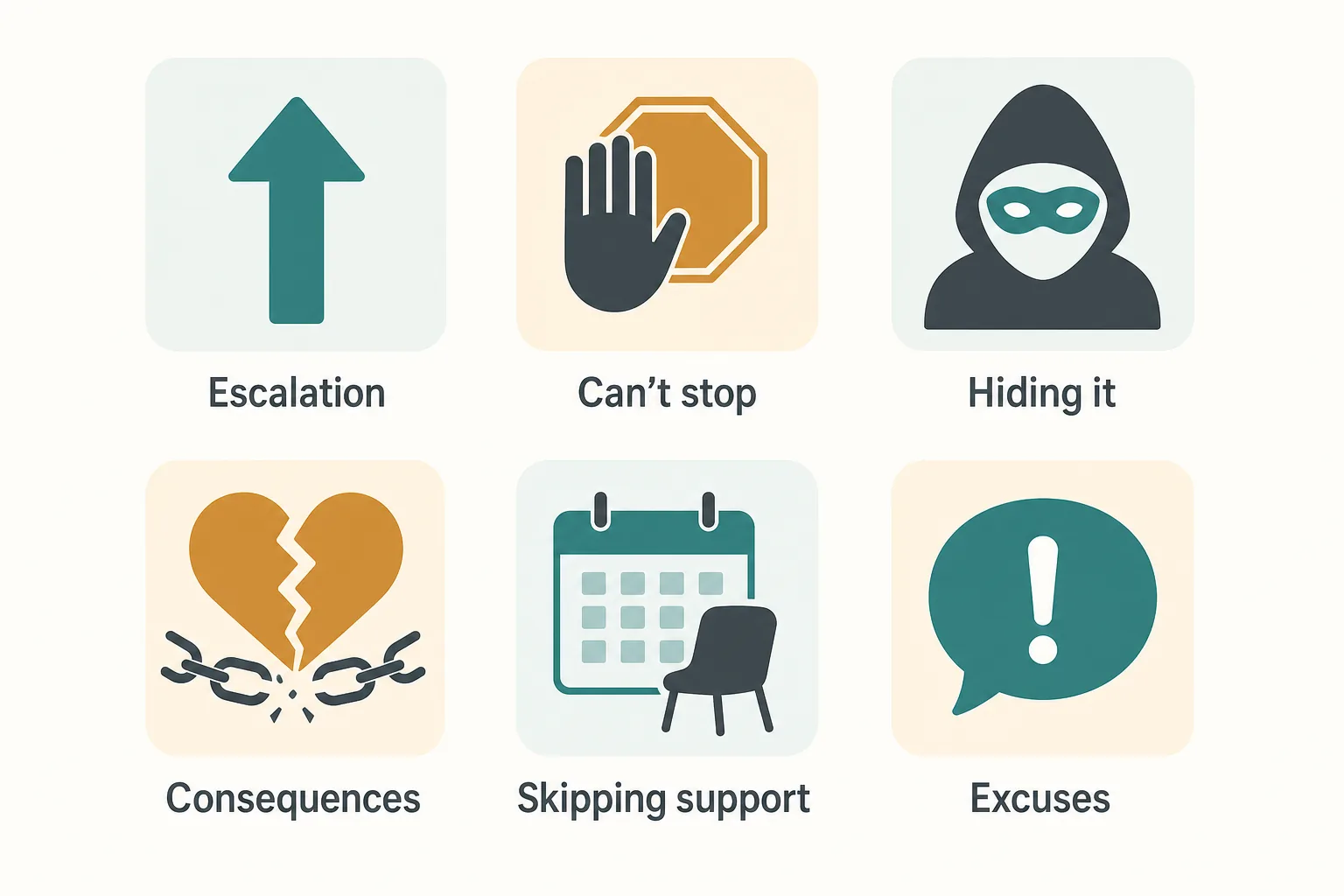
Escalation is one of the clearest signs: you’re giving more time, money, energy or emotional attention to the behaviour than you meant to. Alongside it comes an inability to stop or cut back, where repeated promises to ease off don’t hold and trying to stop leaves you distressed. Watch too for hiding, lying or minimising, as secrecy creeps into your spending, screen time, sexual behaviour, work hours, food or exercise, and for the behaviour becoming your automatic answer to stress, loneliness, anger, anxiety, boredom, conflict or cravings. Consequences may also start to appear: money trouble, relationship strain, missed work, poor performance, health problems, disrupted sleep or neglected responsibilities.
At the same time, recovery routines tend to slip, with fewer meetings, cancelled therapy, less sponsor contact, growing isolation, poorer self-care and less honest reflection. You might notice irritability when interrupted, whether that’s defensiveness, anger, restlessness or anxiety when someone questions the behaviour or your access is limited. Then there’s the rationalising, the familiar justifications such as “at least it’s not drugs”, “I deserve this” or “I can stop whenever I want”. Those thoughts are worth noticing, because glamorising and bargaining are hallmarks of mental relapse, and recognizing early relapse patterns matters because mental relapse tends not to stay put for long.
What to do when you notice the pattern
Start by naming the behaviour honestly and specifically. “I am using gaming to avoid my feelings”, “I am hiding my spending”, or “porn has become compulsive” is far more useful than a vague label or an excuse, and precise naming is what makes the rest possible.
Then tell someone quickly: a sponsor, therapist, recovery mentor, trusted support person or your GP where relevant. Secrecy is part of the risk, so disclosure is itself an intervention, and the moment you talk about what you’re doing, its grip tends to loosen. Next, tighten your recovery routines for the coming few weeks. Increase meeting attendance or support contact, keep your therapy appointments, restore regular sleep and meals, plan sober social contact and return to daily check-ins. Reduce access to triggers in concrete ways too: block gambling apps, set spending limits, remove saved cards, use screen-time limits, avoid high-risk sites and places, schedule rest days from exercise, or build accountability around your work hours.
When an urge hits, use the same tools that work for substance cravings. Delay acting on it, because most urges pass within fifteen to thirty minutes. Contact someone, leave the triggering environment, and play the tape through to the likely consequences rather than the fantasy. Seek specialist behavioral addiction treatment promptly if control is slipping, harm is occurring, your mental health is worsening, cravings for alcohol or drugs are returning, or the behaviour continues despite serious consequences. The aim is not punishment or a perfect record; it’s to interrupt the relapse process before it reaches substance use.
How loved ones can respond without turning into the recovery police
If you’re the concerned partner or family member, raise it early, calmly and specifically, using what you’ve actually observed rather than an accusation. “I’ve noticed you’re hiding bills and missing meetings” opens a conversation; “You’re addicted again” closes one. Keep the focus on safety, recovery routines and real consequences, not moral judgement or control.
Steer the person back to the supports they already have: sponsor, therapist, recovery group, GP or a trusted recovery contact. Resist the urge to police every behaviour, search devices or set traps unless there’s an immediate safety risk, because surveillance usually breeds more secrecy and conflict, the very things that feed relapse. You can still set clear, respectful boundaries around shared money, safety, responsibilities and honesty while making it plain that you care.
The concrete takeaway is the same whether you’re in recovery or supporting someone who is. When a behaviour is becoming secretive, compulsive or harmful, or is quietly replacing recovery routines, treat it as an early warning light rather than a harmless quirk. Name it, bring it into your support network, and act on it before substance use returns.
No Comments