


10 Nov What Is a Relapse Prevention Plan? How to Build One That Actually Holds Up

Most people leaving treatment have been told to stay strong, go to meetings and avoid old haunts. That advice is sound, but it has a habit of vanishing at nine o'clock on a Friday night, when a craving arrives and nobody is around. A relapse prevention plan exists for exactly that moment: a written, practical recovery document that tells you what to notice, what to do and whom to call, in that order, before a hard moment turns into use.
You might be preparing to leave rehab, supporting someone who is, or trying to turn a stack of aftercare advice into something you can actually follow. Whichever it is, this guide shows you how to draft a personalised plan with specific triggers, early-warning signs, coping skills that actually work, support contacts and clear escalation steps for when risk rises.
What a relapse prevention plan is and when to write one
A relapse prevention plan is a short written guide, ideally one to two pages, that sets out your personal risks, the early signs that you're drifting, your coping responses, your support people, the safeguards in your environment and your emergency steps. It isn't a pledge, and it isn't a generic list of relapse prevention strategies copied from a website. Think of it as an operating manual for difficult days, written by you while you're thinking clearly, for the version of you who won't be.
That matters because relapse is usually a process rather than a single event. It often starts days or weeks before any use, first emotionally (isolating, sleeping badly, bottling things up) and then mentally (romanticising past use, bargaining, planning "just once"). A good plan gives you a script for those first two stages, while the situation is still easy to change.
Write your first version before you leave treatment or during aftercare planning. After that, revisit it after any craving, close call or lapse, ahead of predictable high-risk events such as holidays, weddings, travel or anniversaries, and after big changes like a new job, a breakup or a move. Ideally, write or review it with a therapist, counsellor, sponsor, aftercare worker or someone you trust, because they'll spot the vague entries you'd gloss over, and sharing it stops the plan becoming something you keep hidden out of shame.
The core sections your relapse prevention plan should include
Copy these headings into a notebook or phone note and fill in each one. Specific answers beat long ones every time.
1. My reasons for recovery: three to five, in your own words, such as keeping your job, being present for your children or rebuilding trust with a partner.
2. My triggers: listed under emotional, social, environmental, physical and behavioural headings (the next section shows how to make these precise).
3. My early-warning signs: what changes in you, and what others notice, before things start to slide.
4. My protective routines: only actions specific enough to schedule, which are the small daily choices that prevent relapse, for example in bed by 11pm and up by 7am, three meals at set times, medication as prescribed, therapy every Tuesday, two support meetings a week and a 20-minute walk after work.
5. My coping strategies: match each trigger with one or two realistic responses. Rather than "manage stress better", write "after an argument with my brother, I leave the room, walk for 15 minutes and text my sponsor".
6. My support contacts: name, role, phone number, when to contact them and what you'll say. Include professional contacts such as your therapist, prescriber, aftercare team or treatment provider alongside friends and family.
7. My environmental safeguards: no substances in the house, routes that avoid old venues, transport arranged in advance, limits on access to cash if paydays are risky, and an exit plan for any social event you go to.
8. My emergency actions: what you'll do if you're about to use or already have, covered in detail below.
How to identify triggers and warning signs without being vague
"Stress" isn't a trigger you can act on, but "Friday afternoons when the week has gone badly and I'm heading home alone" is. A useful entry names the situation, feeling, time, place, person or behaviour that tends to come before cravings, because only then can you write a response that actually fits.
Work through each category in turn. Emotional cues might include shame after a mistake at work, anger with nowhere to go, or loneliness on weekend evenings, while social cues could be conflict with a partner, long stretches of isolation or a message from someone you used with. Environmental cues often include paydays, particular pubs or streets, travel, airports and being alone at night. Behavioural cues are the quieter ones: skipping meetings, small lies, poor sleep, or catching yourself telling old stories fondly.
Warning signs deserve their own list, written from the outside in. What would the people close to you notice before you'd admit it? Common examples of early relapse warning signs are withdrawing, irritability, secrecy, missing appointments, stopping medication, bargaining with yourself or insisting you're "fine now". One prompt helps more than any checklist: in the week before I've struggled in the past, what changed first?
Finally, rank your triggers by intensity, from mild to severe. That ranking shows you where to put most of your planning effort, so your strongest safeguards sit in front of the situations most likely to lead to use.
Turn the plan into an "if this happens, I do this" framework
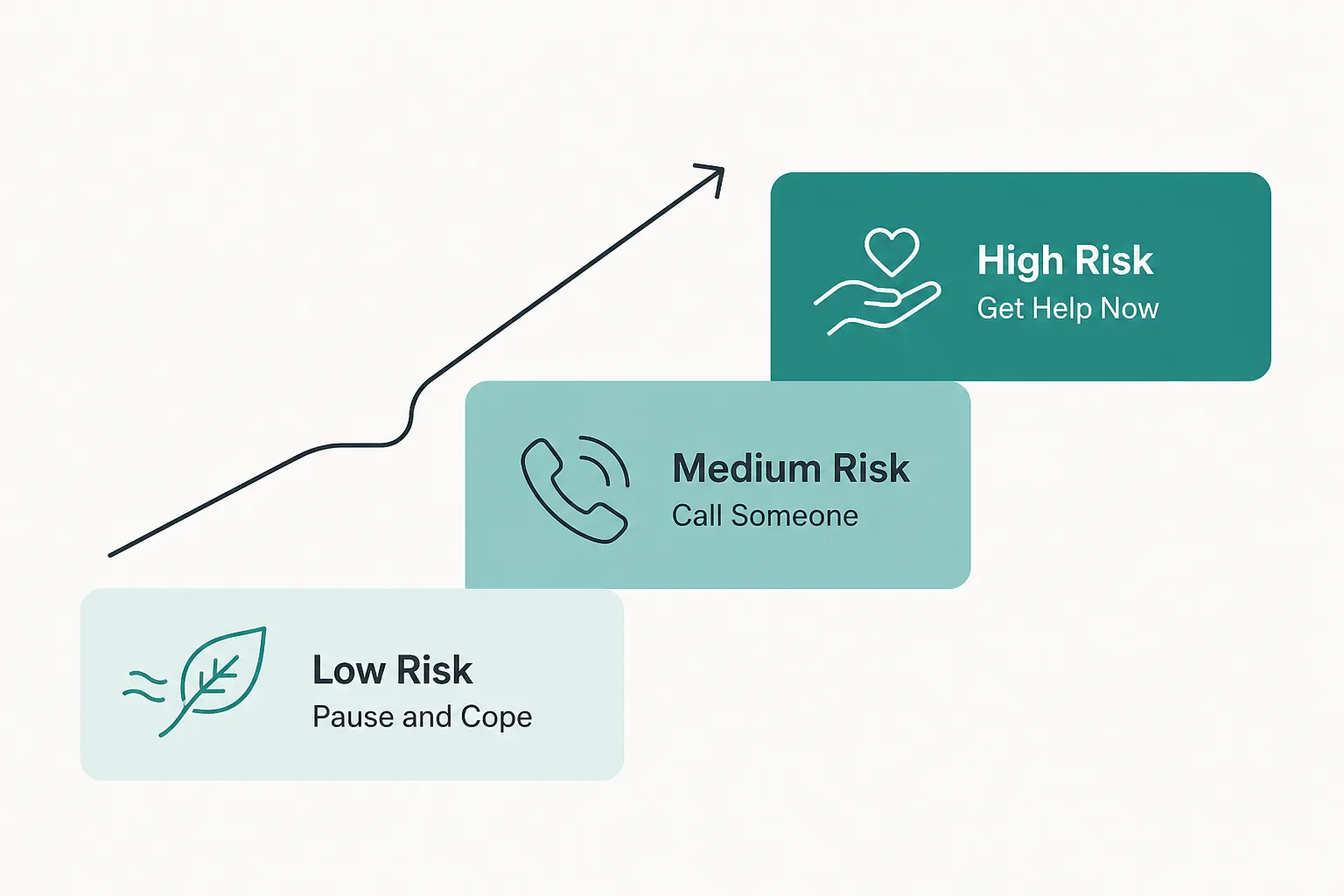
Open-ended advice is hard to follow mid-craving, whereas a decision rule asks only one thing of you: notice the sign, then do the listed action. Sorting your responses into three risk levels makes it simpler still, because you match the size of the response to the size of the threat.
Low risk means early unease or mild cravings. Start with a HALT check, asking whether you're Hungry, Angry, Lonely or Tired, and fix that first with food, water, rest or company. Then add movement, slow breathing, journalling, stepping away from a minor trigger and texting a support person. It helps to know that cravings typically peak and pass within about 15 to 30 minutes, so your job is simply to get through that window with a planned activity.
Medium risk means repeated cravings, growing secrecy, isolation or direct contact with a trigger, so the actions get stronger. Phone a named person rather than texting, go to a meeting that day, change location, cancel the risky plan and tell someone plainly, "I'm at risk today." If you've agreed an accountability step in advance, such as a check-in call that evening, now is the time to use it.
High risk means you're actively planning to use, are near substances, have used once, or feel unable to keep yourself safe. Remove access to substances, don't stay alone, and call your therapist, sponsor, aftercare contact or treatment provider. If safety is at risk, contact emergency services (000 in Australia), and if withdrawal is possible or use has repeated, arrange medical detox or a higher level of support.
Write each rule in the same format so it reads instantly: "If I notice ___, I will do ___ within ___ minutes, then contact ___." For example, if I notice I've driven past my old bar twice this week, I'll tell my sponsor within the hour and change my route home from tomorrow.
Keep the plan usable when risk is real
The best plan is short, visible and practised while you're stable. A one-page plan you actually use beats a 30-page workbook sitting in a drawer, so keep copies where you'll find them fast: in your phone notes, wallet, bedside table, car, aftercare folder and with one trusted person.
Rehearse it before you need it. Save every contact properly, make the first awkward phone call on a good day so the second one is easier, write out the exact words you'll say, and plan your transport home from events in advance. The aim is to take the friction out of the safer choice, so that calling for help takes fewer steps than finding a drink. Share the plan with the people on it, too, so they know which warning signs to watch for and what help is genuinely useful, rather than having to guess.
Your routines, boundaries and daily check-ins belong in the plan as protective actions, not decoration, and our article on how small daily choices prevent relapse before it starts explores why they carry so much weight. Reread the plan weekly at first, then monthly, and update it after any craving, close call, lapse or big life change.
If a lapse or relapse happens, it doesn't mean you've failed or that treatment didn't work. It does mean the plan kicks in straight away: tell someone that day, reduce your risk and look honestly at what happened. Tolerance falls after a period of abstinence, which makes overdose more likely, so contact professional support quickly if use continues, withdrawal is likely or safety is uncertain, and remember that structured aftercare and relapse support can help you recover from a setback and get back on track.
Your next step is simple. Draft the plan today using the headings above, even roughly, then book a time with your therapist, counsellor, sponsor or support person to test every "if this happens" line against one question: is this specific enough that I'd actually do it?
No Comments