


12 Aug How to Choose a Rehab Centre Abroad: 10 Questions to Ask Before You Commit

Most people researching how to choose a rehab centre abroad start with the destination and the photographs, which is the wrong end of the decision. What actually matters is whether a particular centre can safely treat this person’s substance use, physical health, mental health and current medication, and whether they can travel there without risk.
The appeal of going overseas is real. Privacy is easier when your absence simply looks like travel, admission is often within days rather than after a months-long wait, and distance from the people, places and routines that feed an addiction does work that no single therapy session can. Somewhere calm, whether that is Bali or anywhere else, can genuinely support recovery, but only when the clinical safeguards, such as medically supervised detox protocols, sit underneath it. What follows is a checklist of ten questions to ask before you commit, with what a strong answer sounds like and what should stop you booking.
How to choose a rehab centre abroad: start with clinical fit, not the brochure
Before you contact anyone, write down the risk profile: what is being used and in what quantity, how long it has been going on, what happened in previous attempts at treatment, what physical health conditions and prescribed medications are involved, what mental health symptoms are present, and whether the person is well enough to fly. That single page turns a vague enquiry into a proper conversation, because it lets an admissions team tell you honestly whether their programme fits.
Then ask every centre on your shortlist the same ten questions, ideally by email so you have the answers in writing, and follow up on a call. One standard runs through the whole checklist: a strong centre explains its processes plainly, offers evidence when it is reasonable to ask for it, and will tell you when it is not the right fit. Turning someone away is a sign of clinical judgement, not weakness. Treat the opposite as a warning, whether that is pressure to pay a deposit quickly, reassurance without detail, or reluctance to answer practical safety questions. Working through this process is really what choosing a rehab in Bali comes down to: methodically checking that a centre’s standards match the seriousness of what you’re dealing with, rather than being swayed by a polished brochure or a persuasive phone call.
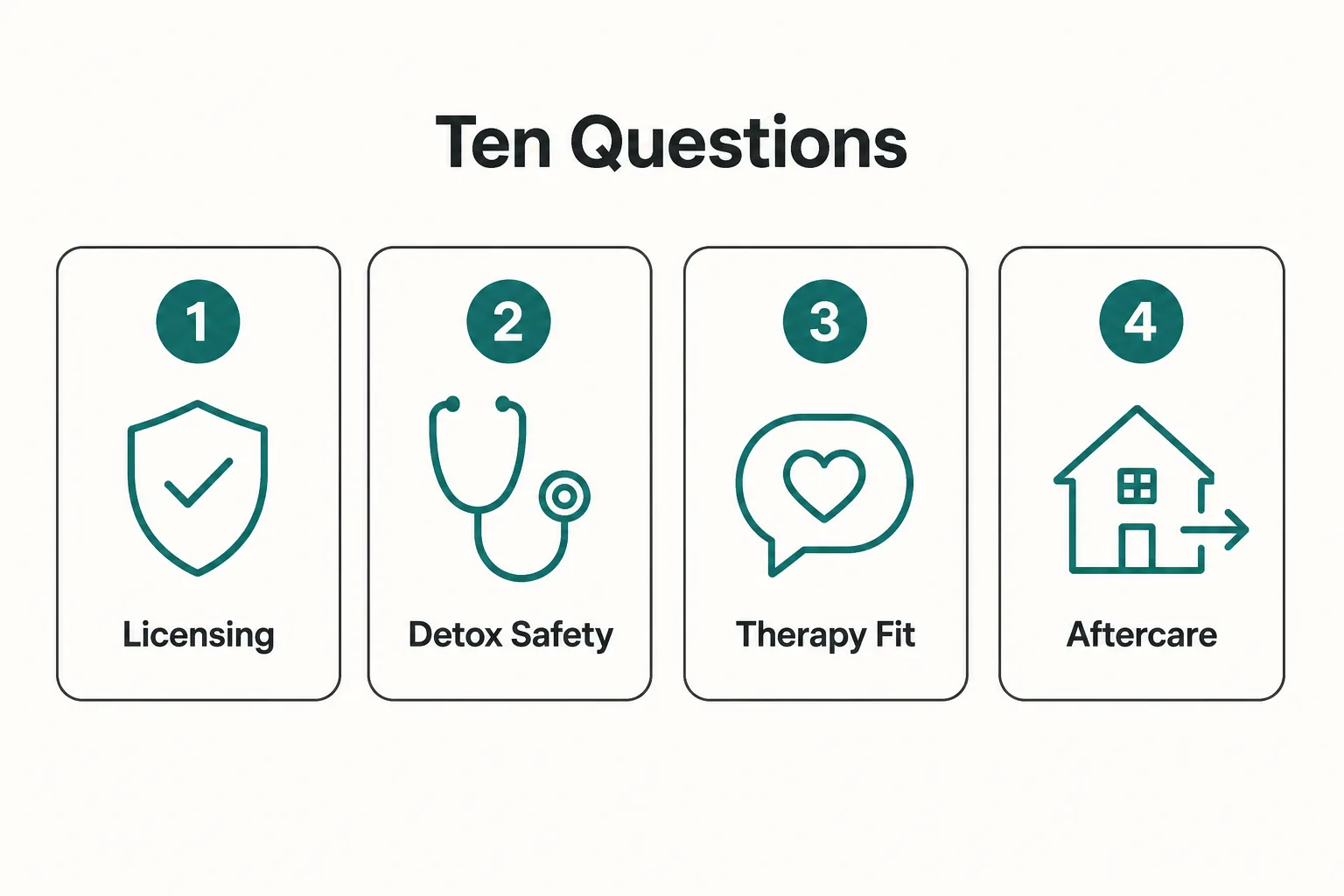
Questions 1 to 4: is the centre legitimate and medically safe?
1. What licensing and accreditation do you hold? A strong answer names current local licensing by the national health authority and any recognised independent accreditation, and explains what each one covers, without hesitation. Independent accreditation matters because it involves external review of clinical practice, safety and outcomes rather than self-assessment. Treat as a red flag any centre that cannot produce licence details, describes accreditation as “pending”, or leans on reviews, awards and photography instead.
2. Who will be responsible for my care, and what are their qualifications? Look for named clinical leads, credentialed therapists, medical and psychiatric oversight where the case needs it, and a clear picture of how many clients each clinician carries. If therapy needs to be in English, confirm that the therapy itself is delivered in English, not just the admissions call. Be wary when the only staff described are coaches, mentors or wellness practitioners with no clinical governance behind them.
3. How do you manage detox and withdrawal? Withdrawal from alcohol, benzodiazepines and opioids can be dangerous without supervision, so the answer should include clinical screening before you travel, medically supervised detox where appropriate, named protocols for higher-risk substances, and specific advice on whether it is safe to fly before detoxing. Anyone who tells a heavy drinker to simply stop before the flight, promises detox will be easy, or accepts a high-risk withdrawal with no medical cover should be ruled out.
4. What assessment happens before admission? Expect a structured suitability assessment covering substance use history, mental health, physical health, medications, risk, fitness to travel and whether the centre can meet those needs safely. Knowing what to look for in a safe detox clinic also means recognising the warning signs: if a centre accepts everyone immediately, asks for payment before any clinical screening, or will not discuss circumstances that might need hospital-level care, it is selling a bed rather than assessing a patient.
Questions 5 and 6: is there real treatment behind the setting?
5. What therapies and programme structure do you use? Ask for a sample weekly timetable. A credible one shows evidence-based therapies such as CBT, DBT or EMDR, a balance of individual and group work, relapse prevention and recovery skills, and a plan built from the intake assessment and reviewed as treatment progresses. Every website says “personalised”, so ask what that means in practice and who reviews the plan. If the schedule is mostly amenities, excursions and relaxation with little detail on clinical goals, you are looking at a retreat with therapy attached.
6. Can you support dual diagnosis or co-occurring mental health issues? Most people entering treatment carry something alongside the addiction, whether that is trauma, depression, anxiety or PTSD. Lasting recovery depends on treating those together with the substance use, so look for screening at intake, psychiatric input, integrated therapy and a clear plan for continuing or adjusting existing medication. Dismissing mental health symptoms, or saying they can be dealt with after rehab, is a red flag.
It is worth being blunt about the setting here. Distance from triggers is genuinely useful and a calm environment makes hard therapeutic work more bearable, but neither of those things is treatment. The programme still has to supply qualified clinicians, structure and measurable recovery planning.
Questions 7 to 10: emergencies, aftercare, family and the practicalities of travelling
7. What happens in a medical or psychiatric emergency? You want 24-hour cover, trained staff on site, a written escalation procedure, a named hospital nearby, transport arrangements and a policy for informing family with consent. Ask how far the nearest hospital is and how long transfer takes. A remote, peaceful location described in lyrical terms with no explanation of medical backup should worry you, because being far from everything cuts both ways.
8. What aftercare and relapse prevention will I have when I go home? The weeks after discharge are usually the hardest, so the answer should include relapse prevention work during treatment, professional aftercare planning that results in a written discharge plan, online follow-up or step-down support that eases you out of intensive care rather than stopping abruptly, referrals or handover to services at home, medication planning, and what happens if treatment has to end early. Ask too whether the stay can be extended if you are not ready to leave. Be sceptical of any centre that presents residential treatment as a cure, offers nothing after discharge, or quotes success rates it cannot substantiate.
9. How do you involve family while protecting confidentiality? Good practice is consent-based: an agreed update frequency, family sessions online where clinically appropriate, clear privacy boundaries, and scheduling that accounts for the time difference, which can be seven or eight hours from the UK to Southeast Asia. Sharing information without consent, blocking reasonable family contact, or having no written confidentiality policy are all reasons to look elsewhere.
10. What do I need to sort out before I book? Ask about passport validity, visa rules for your nationality and the length of stay, airport transfers, whether it is safe to travel at all in the current state of health, and the rules for bringing prescribed medication into the country, which vary and can catch people out badly. On money, ask what the fee includes (accommodation, meals, therapy, medical supervision, aftercare), what it excludes, whether your insurer covers accredited overseas treatment, and the refund position if treatment ends early. Some UK insurers will cover treatment at accredited overseas centres while other policies are domestic-only, so check with your provider directly; a good admissions team will help you verify your specific policy before you commit. Hidden fees, unclear invoices, no medication guidance or pressure to book flights before the clinical and travel questions are settled are all reasons to pause.
Use the answers to decide: proceed, pause or walk away
Run the ten questions past two or three admissions teams, keep the written replies, and pay particular attention to what they say about detox, emergency procedures, licensing, total cost and aftercare. Those five are where the real differences show up, and where vagueness costs the most.
Then apply a simple rule. Proceed when the answers are specific, consistent across email and phone, and match both the clinical needs you wrote down at the start and the travel realities. Pause when something important is unclear, and ask again; a good centre will not mind being asked twice. Walk away if you are being rushed, if answers shift between conversations, or if nobody can explain what happens when something goes wrong at three in the morning.
A calm, private setting far from home can support recovery in ways that treatment down the road cannot, but it is still the wrong choice if the clinical foundations are missing. The centre worth committing to is the one that can prove its credentials, describe its preparedness, and be honest about fit before you have paid a penny.
No Comments