


15 Oct 10 Questions to Ask When Comparing Rehab Costs (So You Know What’s Actually Included)

You probably have a number in front of you already: a daily rate, a weekly fee or a price for a 28-day programme. What that number won't tell you is what is included in rehab cost, what will be billed on top, and whether the care behind it is enough for the person going in. That gap is where most of the stress, and most of the surprise bills, come from.
This guide gives you a practical way to close it. It explains why headline prices mislead, then sets out 10 questions to ask on every admissions call, what a good answer sounds like and how to line quotes up side by side. Knowing what makes a detox clinic safe matters just as much as the price, so the aim is simple: to compare inpatient rehab quotes fairly, catch hidden rehab fees before you pay a deposit, and avoid judging treatment on price alone.
Why a rehab cost per day can be misleading on its own
A headline price only means something once you know exactly what it buys. Behind that figure sit the level of care, the length of stay, whether detox is needed, how much medical supervision is provided, how many therapy hours are scheduled, what kind of room you get and what support follows discharge. Change any one of them and the real cost changes too.
That's why two facilities can quote a similar daily rate and still offer very different treatment. One may include on-site detox, daily medical reviews and several one-to-one sessions a week, while another covers a bed, meals and group sessions and charges for everything clinical separately, which is one of the most common sources of surprise on a rehab bill.
The time period matters just as much. Before you work out a rehab cost per day, find out whether the fee covers the whole programme, a fixed number of nights, a weekly rate or only one stage of treatment, because otherwise you're dividing an unknown by an unknown.
None of this means the cheapest quote is unsafe or the most expensive is better. A higher price often reflects accommodation and amenities rather than clinical care, and what really matters is transparency and whether the programme fits the person's clinical needs.
What is included in rehab cost? 10 questions to ask before you pay
Use these questions to ask before committing on every admissions call, in the same order, and write the answers down. Bear in mind that a vague answer is useful information in itself.
1. Does the quote include detox if I need it? A good answer tells you whether detox is included, charged separately, referred to another facility or decided after a medical assessment, and it names who supervises withdrawal, such as a doctor or nursing team.
2. What medical supervision is included day to day? Ask whether there is round-the-clock nursing on site, how quickly a doctor can be reached, how often medical reviews happen and what the emergency procedure is, including at weekends.
3. How many individual therapy sessions are included each week? You're listening for a number, a session length and the type of clinician, because "therapy is available" isn't an answer.
4. How much of the programme is group therapy versus one-to-one? This tells you about clinical intensity rather than just how full the timetable looks, and it's worth remembering that workshops and activities are not the same as therapy hours.
5. Are psychiatric care and dual-diagnosis support included? If anxiety, depression, trauma or another mental health condition is part of the picture, ask whether psychiatric assessments, medication reviews and specialist appointments are in the fee or billed separately.
6. Are medications, prescriptions and lab tests included? Ask about each one separately (detox medication, ongoing prescriptions, blood tests, urine testing and medication-assisted treatment where relevant), since these are often priced as distinct services.
7. What accommodation, meals and room type does the quote include? Confirm whether the price assumes a shared, private or premium room, and whether dietary requirements, laundry and everyday living costs are covered.
8. Is family support included? Find out whether family calls, education sessions or family therapy are part of the fee, capped at a set number or charged as extras.
9. What aftercare is included after discharge? Ask how long it lasts, what format it takes (online sessions, check-in calls, groups), how often it happens and what it costs to continue beyond that period.
10. Are transfers, length-of-stay changes, refunds and payment terms set out in writing? This should cover airport transfers or local transport, the rate for extending a stay, what is refunded if someone leaves early, deposit rules, staged payments and cancellation terms. A facility that answers this one plainly is telling you something about how it operates.
Separate genuine inclusions from add-ons and hidden rehab fees
A genuinely all-inclusive quote clearly covers the core residential stay: accommodation, meals, the agreed clinical programme and therapy schedule, standard group sessions, routine day-to-day support and a defined aftercare period. If any of those are missing or fuzzy, the word "inclusive" is doing more work than the quote.
On the clinical side, the items most worth clarifying before admission are medical detox, specialist doctor appointments, psychiatric consultations, lab tests, prescriptions, medication-assisted treatment, emergency medical care and external hospital services. Beyond that, check airport transfers, premium room upgrades, extra activities and any aftercare that runs past the included period.
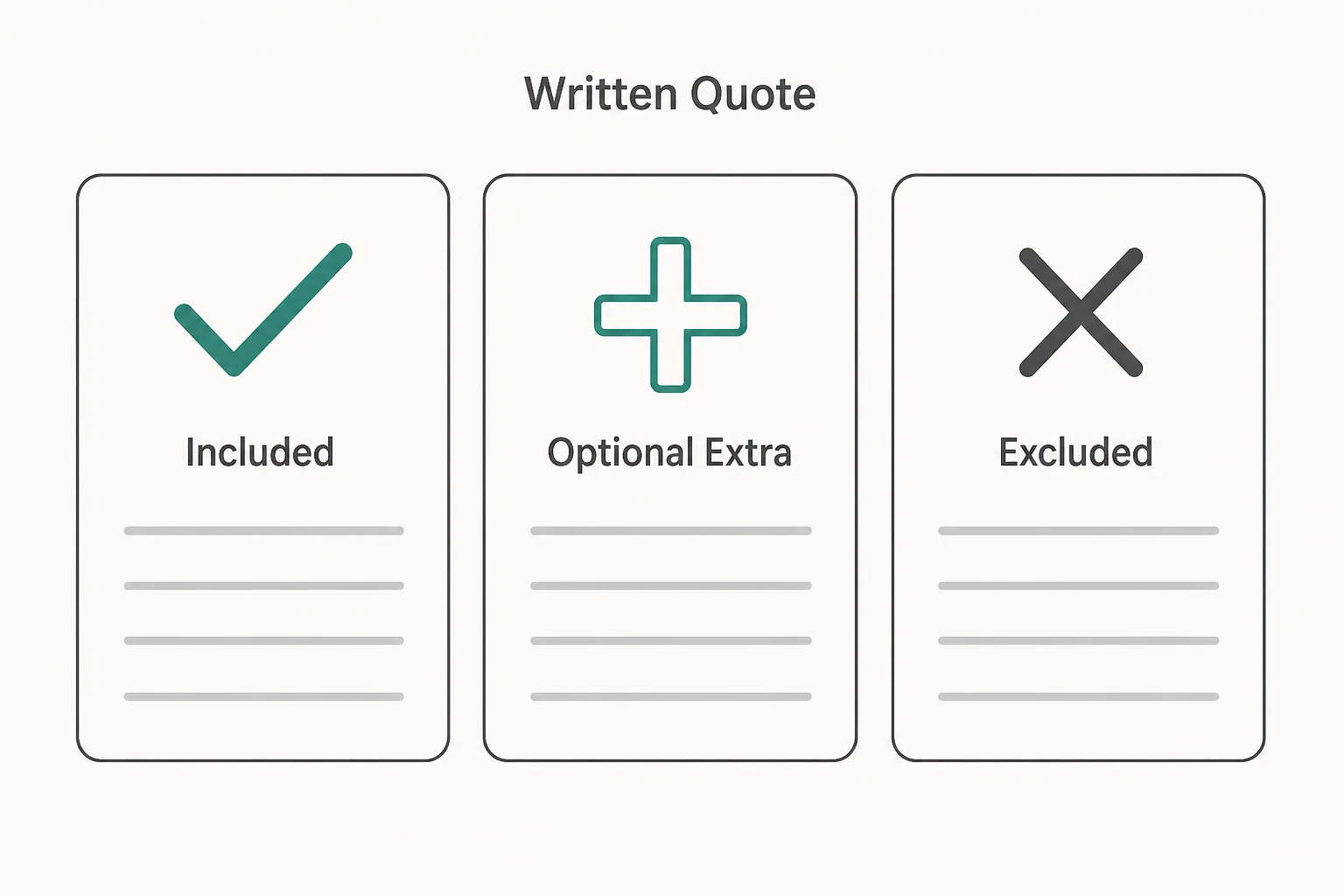
Extras aren't a problem in themselves, and some exclusions are perfectly reasonable, such as hospital care a residential centre can't provide, as long as they're disclosed upfront. The real risk is discovering them after you've paid a deposit or arrived, so the simplest fix is to ask each facility to set out its pricing in three written columns: included, optional extra, and excluded or billed by a third party.
How to compare rehab prices like-for-like
Start by requesting an itemised written quote from every facility. Phone estimates and website ranges are a starting point, but they aren't something you can compare properly or hold anyone to.
Next, pin down the time period. Is the figure per day, per week, for 28 or 30 days, for the full programme, for detox only, for residential only, or for residential plus aftercare? Knowing how long inpatient programmes take helps here, and only once the inclusions and period are clear should you calculate a cost per day, dividing the total comparable fee by the number of included treatment days rather than by a loosely described programme length.
Then compare clinical intensity alongside price. A simple table helps here, with one column per facility and rows for total cost, time period, detox, medical cover, individual therapy sessions, group hours, psychiatric input, medication, accommodation, family support, aftercare, transport, extension rates and refund terms. Any gaps in the table show you exactly which follow-up questions to ask.
Finally, think about the whole treatment pathway rather than just the first residential quote. Research cited by the US National Institute on Drug Abuse suggests most people need at least three months in treatment across all levels of care, though not necessarily in a residential bed, so if extended support or step-down care is likely, ask what it costs now.
Before you pay a deposit: red flags and the next step
Some answers should make you slow down. Be wary of "everything is included" with no written breakdown of what everything means, and of pressure to commit before you've reviewed the inclusions, exclusions and refund terms, or checked whether the programme suits the person's medical needs. Reluctance to put pricing, detox arrangements, medication costs or aftercare details in writing is another warning sign.
Unclear detox plans deserve particular attention for alcohol, benzodiazepines, opioids or other substances where withdrawal may need medical supervision. The same goes for a very low price that comes with little detail about qualified staff, therapy hours, medical cover or what happens if care needs change, because the issue isn't low cost; it's missing detail.
Your next step is a practical one: run through the 10 questions on each admissions call, save every written quote and fill in your comparison table. If you're considering treatment in Bali, read these alongside Calm Rehab's full breakdown of rehab costs in Bali for destination-specific pricing.
In the end, the best quote isn't simply the lowest number. It's the clearest written agreement for clinically appropriate care, with realistic inclusions and exclusions you already know about.
No Comments